
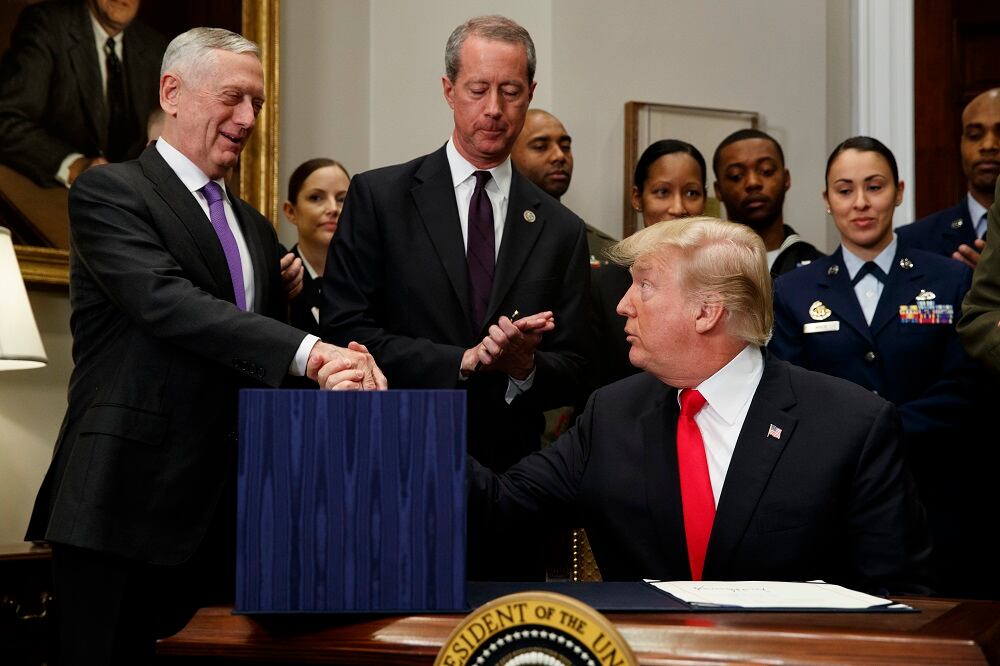

President Donald Trump has signed legislation restoring federal funding for startup programs that are especially important to defense and aerospace companies in California and across the country. According to data, the bill revives Small Business Administration-backed programs whose funding had been delayed for more than six months after expiring in October during a congressional standoff. That interruption had created serious uncertainty for early-stage firms that depend on this money to move from concept to prototype and then toward commercialization.
The law reauthorizes the Small Business Innovation Research program, known as SBIR, the Small Business Technology Transfer program, or STTR, and related efforts. The Times reports that together these programs provide more than $4 billion in seed funding to startups that serve government needs, support economic growth, and help the United States maintain a competitive technological edge. The money is distributed by several federal agencies, including the Departments of Health and Human Services and Energy, as well as NASA, though the military accounts for the largest share.
This matters particularly in Southern California, where defense-tech and aerospace startups have become a major growth story. The funding has helped launch firms across the region, including Costa Mesa-based Anduril Industries, an autonomous-weapons company now valued at more than $30 billion. That makes the reauthorization more than a routine Washington budget fix. It is a direct boost to one of the most strategically important startup ecosystems in the country, especially for companies building technologies with national security applications.
The legislation also reflects a policy debate over how these programs should work. Senator Joni Ernst, the Republican chair of the Senate Committee on Small Business and Entrepreneurship, had delayed reauthorization because she argued that some startups had become too dependent on federal awards instead of building durable commercial businesses. She proposed a version of the bill that would have imposed a $75 million lifetime funding cap on individual companies. But Senator Ed Markey, the committee’s top Democrat, argued that such limits would hurt innovation and weaken promising firms. The final law did not include lifetime caps. Instead, it requires agencies to set annual limits on how many times companies can apply, with the goal of prioritizing newer startups.
Another major feature of the law is a new Strategic Breakthrough Allocation program. Seemingly, it will allow a single company to receive as much as $30 million in SBA funding, as long as it can attract matching investment. That provision is meant to help firms move beyond the earlier research and prototype stages funded by SBIR and STTR and become commercially viable businesses. SBIR and STTR are traditionally aimed at feasibility studies and prototypes, and that STTR specifically requires a partnership with a research institution.
The law also includes stronger due-diligence requirements intended to prevent technology developed through these programs from ending up in the hands of foreign adversaries such as China. That addition shows how startup funding is now being shaped not just by innovation policy, but by national security concerns.
Overall, the legislation restores a major source of capital for early-stage companies after a damaging pause and gives defense startups renewed access to federal support. At the same time, it reshapes the rules to favor younger firms, encourage outside matching capital, and tighten safeguards around sensitive technology. The result is a bipartisan five-year reauthorization that aims to keep small businesses innovating while aligning those efforts more closely with U.S. economic and security priorities.