
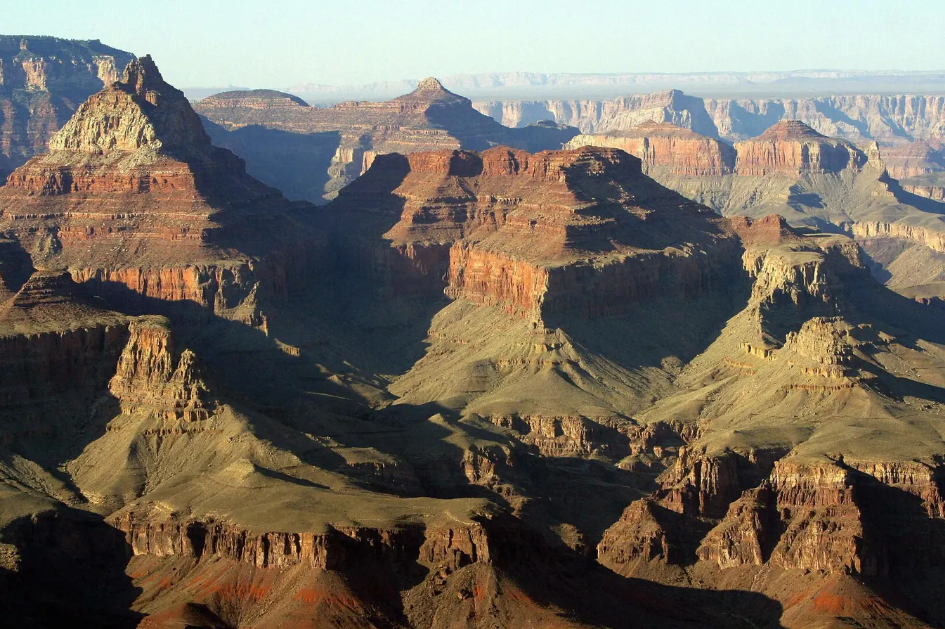

Scientists have produced a new reconstruction of the Grand Canyon’s geological history, offering fresh insight into how one of the world’s most famous landscapes formed over vast stretches of time. The research traces how the canyon’s layered rock, shifting river systems and tectonic changes interacted across millions of years to create the dramatic terrain seen today. The findings help clarify a long-running scientific debate over when different parts of the canyon formed and how the modern Colorado River system became connected.
The new work suggests the Grand Canyon did not emerge all at once through a single continuous process. Instead, different segments formed at different times, with ancient valleys and drainage systems later linked together by the Colorado River. This supports the idea that the canyon is the product of a more complex, step-by-step evolution rather than one uniform event. That distinction matters because geologists have long argued over whether the canyon is relatively young in geological terms or whether some sections are much older than the river system now running through it.
The Grand Canyon exposes rock layers that span nearly 2 billion years of Earth history, making it both a stunning landscape and a natural archive of geological change. The new study helps explain how uplift of the Colorado Plateau, erosion, and river integration worked together to shape the canyon. As the land rose, rivers gained the energy needed to cut more deeply into the rock. Over time, that incision revealed older rock layers and widened the canyon into its modern form. In this interpretation, the canyon’s present appearance reflects not just erosion by one river, but the interaction of tectonic uplift, ancient topography and changing drainage networks.
One of the key scientific issues has been timing. Researchers used evidence from the canyon’s geology to better determine when segments of the canyon were carved and when the Colorado River became fully integrated through the region. Their conclusion points to a mixed history in which some western portions may preserve much older landscapes, while the full through-going river system is younger. That helps bridge two competing schools of thought: one emphasizing an ancient canyon origin and another arguing that the main canyon was carved more recently. Rather than fully choosing one side, the new reconstruction suggests both contain part of the truth.
The study also shows how landscapes can preserve traces of earlier worlds even after being reshaped by later processes. Ancient valleys can be reoccupied by newer rivers, and tectonic changes can redirect drainage patterns in ways that transform a region over time. The Grand Canyon is a powerful example of this layered history because today’s landscape contains evidence of several different phases of incision and reorganization, not just one moment of origin.
Beyond the canyon itself, the research matters because it improves scientific understanding of how large river systems evolve in tectonically active landscapes. The same kinds of questions apply to other major canyons and plateau regions around the world: when did uplift happen, how did drainage networks connect, and how do older landforms survive inside younger systems. The Grand Canyon study was an important contribution to those broader geological questions, not just to local Arizona history.
Overall, the new research does not reduce the Grand Canyon to a simple origin story. Instead, it portrays the canyon as the result of a long and complicated sequence of geological events. Some parts are older than once thought, others were shaped later, and the modern Colorado River acted as both inheritor and sculptor of earlier landscapes. The result is a more nuanced explanation of how the Grand Canyon became the immense and layered landmark known today.