
House Democrats are preparing an aggressive legislative and investigative agenda if they regain control of the U.S. House of Representatives in the 2026 midterm elections, but an emerging challenge could determine whether they can actually deliver on those promises: keeping their ideologically diverse caucus united.
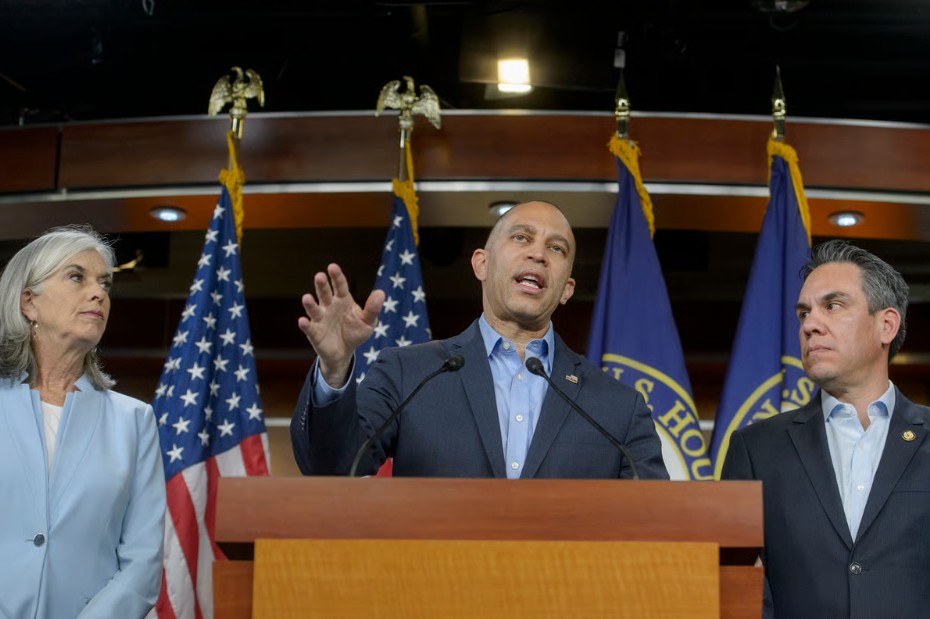
House Minority Leader Hakeem Jeffries, who would be positioned to become speaker if Democrats capture the chamber, says the party intends to move quickly beginning on its first day in power. His agenda combines investigations of President Donald Trump’s administration with legislation focused heavily on Americans’ cost-of-living concerns.
Democrats are developing proposals around five major affordability areas: housing, healthcare, childcare, groceries, and gasoline and utilities. Jeffries has also outlined broader priorities including reversing Republican Medicaid cuts, restoring enhanced Affordable Care Act assistance, repealing Trump’s tariffs and seeking an end to the war with Iran.
Oversight would be another major priority.
Democrats on the House Oversight and Judiciary committees are preparing investigations into alleged corruption and actions by the Trump administration. Jeffries has promised that Democrats would use congressional authority to hold administration officials accountable if voters return them to power.
The strategy comes as Democrats see a realistic opportunity to capture the House. Republicans currently hold only a narrow majority, and Democrats need to flip just a small number of seats. Recent polling and special-election performances have strengthened Democratic optimism, although Republican-friendly redistricting could make winning the chamber more difficult.
Yet the party’s biggest challenge may come from within.
A recent procedural vote exposed tensions between Democratic leaders and two centrist lawmakers, Reps. Jared Golden of Maine and Marie Gluesenkamp Perez of Washington. Both broke with their party and voted with Republicans, helping GOP leaders advance their legislative agenda.
Golden, who is retiring, was attempting to secure progress on legislation protecting Maine’s lobster industry. Gluesenkamp Perez represents a politically competitive Washington district that Trump carried, making her one of the Democratic caucus’s most independent members.
Their decision infuriated some Democrats.
Procedural votes traditionally represent basic tests of party unity because they determine whether legislation can advance to the House floor. Democrats fear that if they regain power with only a tiny majority, defections from just two or three lawmakers could repeatedly derail their agenda.
Republicans have experienced precisely that problem.
Former Speaker Kevin McCarthy was removed from office after a small faction of Republican lawmakers rebelled against him, while current Speaker Mike Johnson has repeatedly struggled to manage a narrow and ideologically divided majority. Democrats want to avoid reproducing that instability.
Jeffries therefore faces a delicate leadership challenge.
The Democratic caucus contains moderate Blue Dogs and New Democrats alongside an increasingly influential progressive wing and candidates associated with the Democratic Socialists of America. Some represent deeply Democratic districts, while others must win voters in communities that supported Trump.
Those differences make absolute party discipline difficult.
Jeffries has emphasized that Democrats value every faction of the caucus and said he had a productive conversation with Gluesenkamp Perez following the controversial vote. His broader strategy appears designed to concentrate attention on issues capable of uniting Democrats rather than immediately embracing proposals that could divide them.
Even Jeffries’s willingness to communicate with the Trump administration has generated internal criticism. Progressive Democrats recently objected after he met with Jared Kushner, Trump’s son-in-law and outside adviser. Jeffries defended the meeting simply by noting that Kushner requested it and he agreed.
The episode illustrates the political balancing act Jeffries could face as speaker.
Democrats must simultaneously satisfy progressive voters demanding aggressive opposition to Trump, protect moderate lawmakers representing competitive districts and maintain enough internal discipline to pass legislation through what could be an extremely narrow majority.
With control of Congress at stake, Democrats are campaigning on affordability, healthcare and government accountability. If they win, they could gain powerful investigative authority over the Trump administration and potentially block much of the president’s remaining legislative program.
But winning the House and governing it are two different challenges.
Jeffries may enter 2027 with an ambitious plan to reshape Washington, but its success could depend less on defeating Republicans than on whether he can prevent Democrats from developing the same internal fractures that have repeatedly paralyzed the current Republican majority.