
Across the United States, a troubling contradiction is emerging in the housing crisis: thousands of apartments officially classified as affordable are sitting vacant while millions of the country’s poorest renters cannot find homes they can afford. The problem exposes a fundamental mismatch between the affordable housing America is building and the people experiencing the most severe housing insecurity.
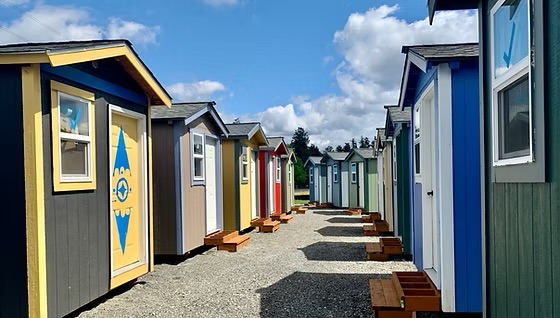
The situation is particularly striking in Austin, Texas. More than 4,500 affordable units are vacant, producing a vacancy rate approaching 16%. Yet people such as 49-year-old Mathew Davis remain in homeless shelters because their incomes are too low to afford even heavily discounted housing. Davis earns only a few hundred dollars each month, partly by donating blood plasma, leaving even a $450-per-month tiny home beyond his financial reach.
The contradiction stems largely from how America’s affordable housing system defines affordability.
There are approximately 11 million extremely low-income renter households nationwide but only around 4 million affordable rental homes available to them. Extremely low-income households generally earn below the federal poverty level or less than 30% of their area’s median income, whichever is higher. About three-quarters of these households spend more than half their income on housing and utilities.
However, much of the subsidized housing constructed in recent years targets households earning considerably more.
The federal Low-Income Housing Tax Credit, America’s largest affordable-housing production program, provides incentives to developers who keep apartments below specified rent levels for decades. But only around 12% of the affordable units financed through the program in 2024 were reserved for extremely low-income households. Most targeted renters earning at least 50% of area median income.
In Austin, for example, a single person earning around $47,000 can qualify for some affordable housing, while an extremely low-income resident earns less than roughly $28,000.
Developers argue that economics make constructing apartments for the poorest households extremely difficult without additional government assistance. A Washington-area affordable developer explained that an apartment designed for someone earning 60% of area median income can generate about $1,715 monthly in rent, while mortgage and operating expenses consume approximately $1,575. Charging half that amount to an extremely poor tenant would make the project financially unsustainable without another subsidy.
Housing vouchers could bridge that gap, but they are severely limited. Experts estimate that only one in four eligible families receives federal rental assistance, and waiting lists can stretch for years.
Meanwhile, another unexpected problem is emerging: some subsidized apartments are becoming almost as expensive as ordinary market-rate housing.
In Portland, Oregon, more than 1,700 affordable apartments are vacant. Many target people earning 60% of area median income and have rents capped at $1,444 per month. Yet the average market-rate one-bedroom apartment costs around $1,581—only modestly more.
Market-rate apartments can also be easier to obtain. Affordable-housing applicants may need to submit extensive documentation verifying income and financial transactions. Private landlords can sometimes approve applicants much faster. For renters who can afford the difference, paying slightly more may therefore seem preferable to navigating a complicated subsidized-housing application.
Denver faces a similar imbalance. Vacancy rates reach approximately 13% among tax-credit apartments intended for households earning 60% of area median income and 21% for units targeting those at 80%, even while the city lacks sufficient housing for its poorest residents.
Austin’s experience demonstrates how dramatically housing production can miss the population experiencing the greatest need.
The city established a goal of constructing 20,000 homes for extremely low-income households between 2018 and 2027. By 2024, only 543 had been completed. In contrast, Austin successfully built all 15,000 units planned for residents earning between 60% and 80% of area median income.
The broader lesson is that simply constructing more units labeled “affordable” does not necessarily solve homelessness or severe housing insecurity.
America’s housing system has become reasonably effective at subsidizing construction for some moderate- and lower-income households, but the economics become considerably more difficult at the very bottom of the income distribution. Without deeper subsidies, additional vouchers or different financing structures, developers cannot easily charge rents low enough to serve people living on only a few hundred dollars each month.
The result is one of the strangest contradictions in America’s housing crisis: people who desperately need affordable housing cannot afford it, while apartments specifically designated as affordable remain empty.
Solving the problem may therefore require policymakers to focus not simply on how many affordable homes are built, but on a more important question: affordable for whom?