
California is establishing the nation’s first standards for determining when homes contaminated by wildfire smoke are safe to occupy, addressing a major problem exposed by the devastating 2025 Los Angeles fires: thousands of houses survived the flames but remained contaminated by hazardous smoke, ash and toxic materials.
Gov. Gavin Newsom signed two complementary measures, Assembly Bills 1642 and 1795, designed to create science-based testing and cleanup requirements while clarifying what insurance companies must cover.
The legislation emerged from the aftermath of the Eaton and Palisades fires, which together destroyed more than 16,000 structures and killed 31 people. Thousands of additional homes remained standing but were infiltrated by smoke and ash containing potentially dangerous substances such as lead and asbestos.
For many residents, surviving the fire was only the beginning of a prolonged struggle.
Homeowners reported conflicting information about whether their properties were safe. Some spent months fighting insurers over testing, cleanup expenses and temporary housing. Without consistent statewide standards, homeowners, remediation companies, government agencies and insurers could reach different conclusions about what constituted adequate cleanup.
The scale of the problem was substantial. California’s Department of Insurance estimates that more than 13,000 of roughly 40,000 insurance claims stemming from the January 2025 fires involved homes damaged by smoke rather than destroyed by flames.
AB 1642 attempts to eliminate that uncertainty.
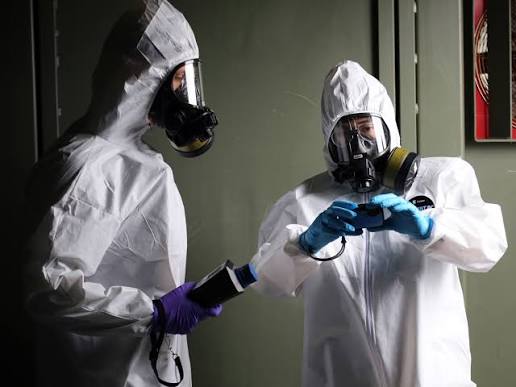
The law directs California’s Department of Toxic Substances Control and Air Resources Board to establish scientific standards governing the testing, remediation and restoration of homes exposed to wildfire-related lead and asbestos contamination.
The objective is to create a clear threshold for answering one critical question: When is a smoke-damaged home actually safe for people to live in again?
The companion legislation, AB 1795, connects those scientific standards directly to insurance coverage.
Insurers will be required to pay for qualifying lead and asbestos testing and remediation for smoke-damaged homes within wildfire zones. They must also cover restoration necessary to return qualifying properties to their pre-loss condition.
Importantly, insurers will not be permitted to terminate Additional Living Expense coverage simply because a house remains physically standing. That assistance must continue until required remediation is completed and the property is considered safe to occupy.
The reforms respond directly to complaints from survivors of the Eaton Fire.
Residents organized after independent testing revealed contamination in homes that initially appeared undamaged. Data collected by survivor advocates indicated that many tested properties contained lead levels exceeding federal safety benchmarks, while some homes remained unsafe even after initial cleanup attempts.
The dispute also produced legal battles.
California’s FAIR Plan, the state’s insurer of last resort, faced litigation over how it handled smoke-damage claims. Los Angeles County has separately sued State Farm, alleging that the insurer improperly suppressed smoke-related claims. State Farm has disputed allegations concerning its claims practices.
Insurance industry representatives have expressed support for clearer standards while emphasizing that the regulations should rely on credible scientific evidence and consistent testing methodologies.
The laws could have implications far beyond Los Angeles.
Wildfire smoke can travel enormous distances and penetrate buildings that flames never approach. As severe fires increasingly affect communities throughout the American West, determining whether apparently intact homes contain dangerous contamination is becoming an important part of disaster recovery.
California is effectively creating a regulatory model that other fire-prone states could examine.
Newsom also signed measures expanding mortgage protections for disaster survivors, including provisions allowing homeowners affected by future federally declared disasters to seek mortgage forbearance when their properties become uninhabitable.
Together, the reforms reflect an important change in how California defines wildfire damage.
Historically, the most visible measure of destruction has been the number of structures burned. But the Los Angeles fires demonstrated that a house does not have to burn to become unsafe.
Smoke, ash and microscopic contaminants can leave families displaced long after firefighters extinguish the flames.
California’s new framework attempts to replace uncertainty with standardized science while shifting more responsibility for testing and cleanup toward insurers.
The larger lesson from the 2025 fires is therefore reshaping disaster policy: saving a building from the flames does not necessarily mean saving the home inside it.