
The European Union and the United States are continuing talks on critical minerals and tariffs, a sign that both sides are trying to stabilize trade ties after months of tension and avoid a broader economic confrontation. EU Trade Commissioner Maros Sefcovic described his meeting with U.S. Trade Representative Jamieson Greer as “very positive” after the two met on the sidelines of a World Trade Organization ministerial gathering in Cameroon. Sefcovic said they agreed to keep advancing work on critical minerals, while also discussing tariffs, two subjects that have become central to the current transatlantic trade relationship.
The meeting came at an important moment because EU lawmakers had just moved forward with legislation needed to fulfill Europe’s side of a trade arrangement reached with the United States in Turnberry, Scotland, in July 2025. That agreement helped cool a potentially damaging tariff dispute between two of the world’s largest economic partners. Seemingly, the deal set a 15% U.S. import tariff on most EU goods, which was half the rate previously threatened by President Donald Trump, and in doing so helped avert a much larger trade war between allies that together account for nearly one-third of global trade.
Even so, the atmosphere remains cautious rather than fully trusting. EU lawmakers added safeguards to the legislation advancing the bloc’s side of the agreement because of concern that Washington might not fully stick to the deal. That detail matters because it shows the current relationship is still shaped by uncertainty. While both sides are publicly signaling cooperation, Europe is also trying to protect itself in case the political commitment behind the agreement weakens or U.S. policy shifts again. Sefcovic said both the parliamentary vote and his positive meeting with Greer were important signs that, despite turbulence on the global stage, both sides are still honoring the agreement.
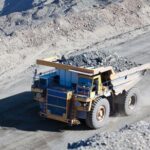
Critical minerals have become an especially strategic part of the conversation because they are essential for sectors such as batteries, clean energy technology, electronics, and defense-related supply chains. There is not a list specific minerals, but the fact that Sefcovic highlighted the issue suggests the EU and U.S. are trying to deepen cooperation in areas tied to industrial security and long-term competitiveness. This is about more than ordinary trade flows. It reflects the growing importance of securing reliable access to materials that support the energy transition and advanced manufacturing.
At the same time, the EU is making clear that it does not want its future trade strategy to depend entirely on Washington. Sefcovic said the bloc is also looking to other trading partners and wants to work as much as possible with countries interested in free trade agreements. He added that the EU aims to lower tariffs not only in future deals but also with partners with whom it already trades. That message suggests Brussels is trying to balance closer engagement with the United States against a broader diversification strategy in an increasingly unstable global trade environment.
The scale of the relationship gives those talks major weight. The United States is the EU’s largest trading partner, with EU exports to the U.S. reaching a record 555 billion euros, or about $641 billion, in 2025. That helps explain why both sides are still investing political effort into maintaining the tariff agreement even after earlier threats and uncertainty.
Overall, the latest talks are a cautiously encouraging sign. The EU and U.S. are still discussing sensitive issues like tariffs, but they are also trying to build practical cooperation around critical minerals and keep a fragile trade understanding alive. The result is not a full reset in transatlantic trade relations, but it does suggest that both sides see strategic value in avoiding escalation while working toward a more stable economic partnership.