
New York City is preparing for a major transformation of its subway system as the Metropolitan Transportation Authority (MTA) expands its installation of modern fare gates designed to reduce unpaid rides, improve accessibility, and protect hundreds of millions of dollars in annual transit revenue.
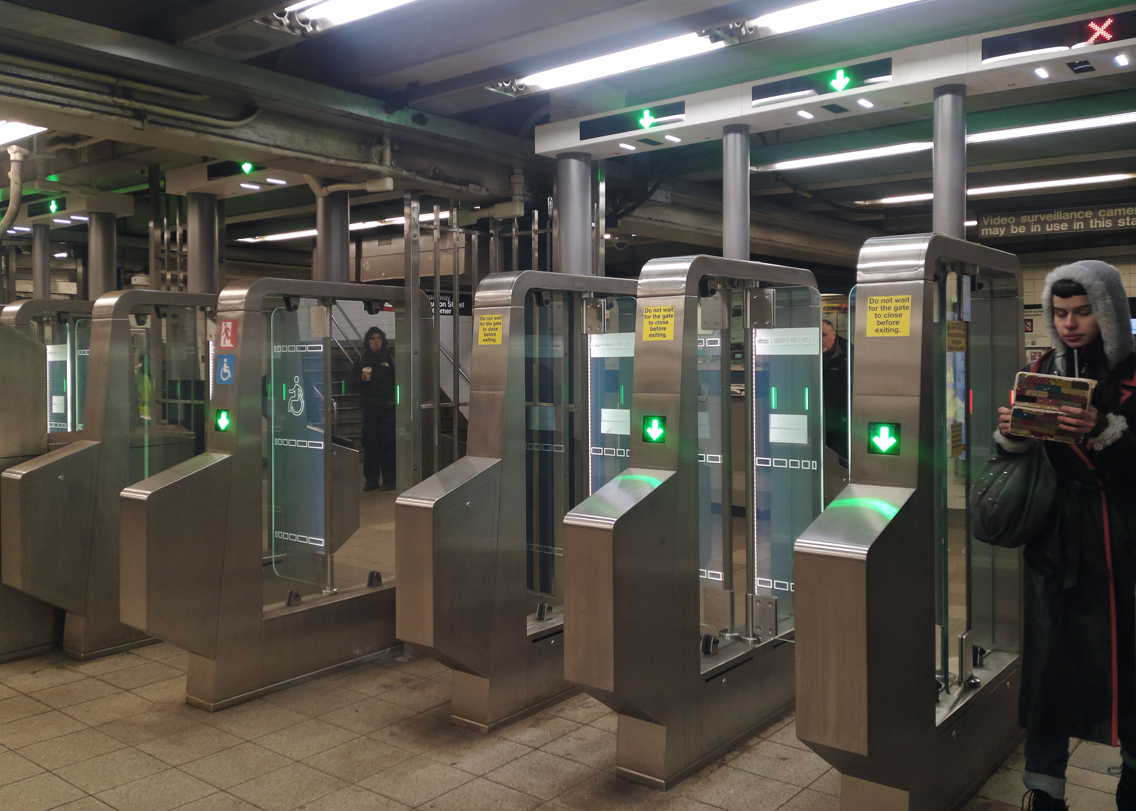
The initiative represents one of the most significant changes to subway station entrances in decades, replacing traditional turnstiles with wider, sensor-equipped gates that use automated glass doors.
On October 7, Governor Kathy Hochul and MTA officials announced that an initial pilot program had reduced fare evasion by an average of 35% across 20 subway stations, encouraging the agency to accelerate its modernization efforts.
The new gates have already been used by more than 63 million passengers, providing transit officials with substantial information about how the technology performs under everyday operating conditions.
The MTA now plans to expand the system to another 20 stations across Manhattan, Brooklyn, Queens, and the Bronx.
The broader modernization program includes approximately $1.1 billion in funding through the MTA’s 2025–2029 capital plan, with the goal of installing modern fare gates at more than 150 stations.
Fare evasion has become a major financial challenge for New York’s transit network.
The MTA estimates that unpaid subway rides cost the agency hundreds of millions of dollars annually, reducing revenue available for maintenance, infrastructure improvements, and daily operations.
Traditional turnstiles have proved increasingly vulnerable to passengers jumping over barriers or entering through emergency exits without paying.
The new gates are intended to make those methods more difficult.
Instead of rotating metal barriers, the technology uses transparent doors, sensors, and electronic payment verification to regulate access.
The pilot program involved three companies: Cubic, Conduent, and S Traffic.
According to MTA officials, Cubic’s equipment delivered particularly strong results at two stations with high levels of fare evasion, reducing unpaid entries by approximately 72%.
However, performance varied among manufacturers and stations, demonstrating that the agency must carefully evaluate which designs offer the best combination of security, reliability, and passenger convenience.
The project is not solely focused on preventing fare evasion. Traditional subway turnstiles can be difficult for passengers using wheelchairs, walkers, strollers, or large suitcases.
The new gates feature wider entrances intended to allow these passengers to move through stations more comfortably.
Transit officials also believe the technology could reduce congestion during rush hours by allowing people to enter and exit more efficiently.
For a subway system carrying millions of riders, even relatively small improvements in passenger flow could make a meaningful difference.
Despite the encouraging pilot results, the expansion raises important questions.
The $1.1 billion investment represents a substantial financial commitment at a time when New York’s transportation system faces competing infrastructure needs.
Critics have also questioned whether the new barriers can consistently prevent determined fare evaders from entering without paying.
Earlier demonstrations and online videos showed passengers finding ways around some gate designs, highlighting the challenges of developing technology that is both accessible and resistant to misuse.
Safety and reliability will also remain important considerations as the equipment is introduced at increasingly busy stations. The MTA expects installations at the next group of stations to begin before the end of 2026.
Major transportation hubs, including Union Square, Yankee Stadium, and Flushing–Main Street, are among the locations included in the expansion.
If the program continues delivering measurable improvements, the technology could eventually become a defining feature of New York City’s subway system.
The initiative reflects a broader effort to modernize public transportation through automation, digital payments, and improved station design.
For New Yorkers, the ultimate measure of success will be whether the new gates reduce fare evasion while making everyday travel faster, safer, and more accessible.
The project could reshape how millions of passengers enter the subway—and how the city protects the revenue needed to keep its transportation network running.