
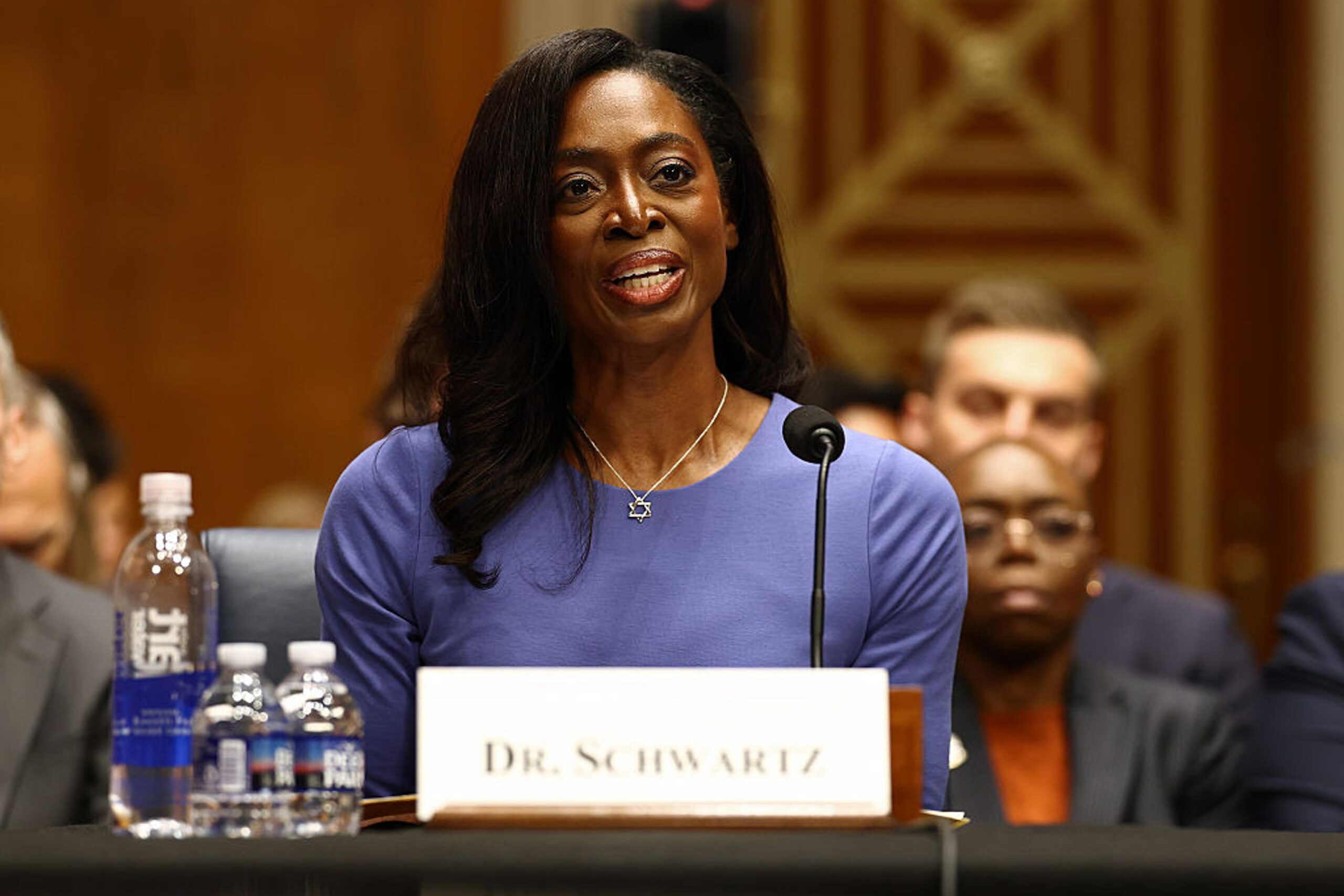

A U.S. Senate committee has postponed a vote on whether to advance Dr. Erica Schwartz’s nomination to become director of the Centers for Disease Control and Prevention, delaying a closely watched decision about the future leadership of the nation’s principal public-health agency. The Senate Health, Education, Labor and Pensions Committee had planned to consider her nomination on Thursday, but the vote was moved to the following week because a family emergency prevented enough Republican senators from attending.
Committee Chair Bill Cassidy, a Republican from Louisiana, explained that the delay was logistical rather than a rejection of Schwartz. Republicans hold a narrow advantage on the committee, making attendance crucial when Democratic opposition is expected. Cassidy’s support is especially important because he had previously questioned whether Schwartz would be willing to resist political pressure from Health and Human Services Secretary Robert F. Kennedy Jr.
Schwartz, 54, is a physician and former deputy U.S. surgeon general with experience in military and federal public health. Should the committee approve her nomination and the full Senate confirm her, she would become the CDC’s 22nd director. The Atlanta-based agency is responsible for protecting Americans from infectious diseases, environmental dangers and other preventable health threats.
Her confirmation hearing focused heavily on whether she would preserve the CDC’s scientific independence. Senators pressed her about the possibility that Kennedy or other administration officials could demand policy decisions that conflict with medical evidence. Schwartz promised that she would not betray science and said she would promote transparency, but she frustrated some lawmakers by declining to directly criticize several of Kennedy’s controversial actions involving vaccines and the CDC.
Cassidy later said that, after reviewing her testimony and speaking with her further, he had concluded that she could withstand inappropriate pressure. His endorsement improves her chances of moving through the committee, although the nomination remains politically divisive. Democrats, including ranking member Bernie Sanders, are expected to oppose her confirmation amid concerns that she has not provided sufficiently clear guarantees of independence.
The leadership decision comes during a difficult period for the CDC. The agency has experienced repeated changes at the top, departures of senior employees and broader instability since President Donald Trump returned to office. Several important positions across the Department of Health and Human Services also remain unfilled, leaving major federal health agencies without permanent leadership during a period of significant public-health challenges.
Those challenges include rising measles infections, foodborne and parasitic disease outbreaks and international threats such as Ebola. Public-health experts argue that the CDC needs a credible and independent director capable of rebuilding employee morale, restoring public trust and providing consistent scientific guidance. Schwartz’s supporters say her medical, legal and administrative background could help stabilize the agency. Critics remain uncertain about whether she would confront administration officials when scientific recommendations conflict with political priorities.
The committee also postponed action involving Sean Kaufman, the nominee for assistant secretary for preparedness and response. Senators had criticized some of his previous statements about vaccines, and his nomination is expected to receive separate consideration on July 30. That position oversees federal preparation for health emergencies and disasters, adding to concerns about prolonged vacancies in the government’s public-health leadership.
The delayed vote does not appear to have significantly weakened Schwartz’s prospects. Instead, it extends the debate over whether she can provide the scientific independence and stability the CDC urgently needs. The committee’s rescheduled decision will determine whether her nomination proceeds to the full Senate for final consideration.