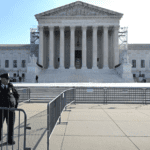
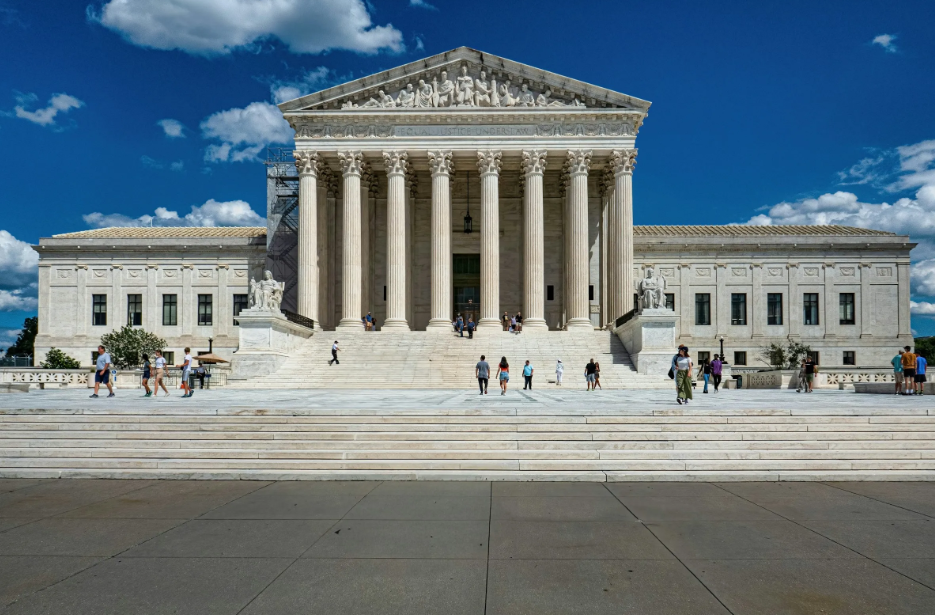

The U.S. Supreme Court handed Republicans a potentially important boost for the 2026 midterms by restoring the existing boundaries of New York’s 11th Congressional District—New York City’s only GOP-held House seat—after a state judge ordered the map redrawn. The case was brought to the Court on an emergency basis by Republican Rep. Nicole Malliotakis, whose Staten Island–based district had been ruled unlawful by a New York judge on the grounds that it diluted the voting strength of Black and Latino communities. By granting Malliotakis’ request, the Supreme Court effectively pauses the state-court remedy and reinstates the district lines for now, shaping the terrain for November’s elections.
The Court’s conservative majority voted 6–3 to step in, with Justice Samuel Alito writing in support of the ruling. The key legal issue was not simply partisan advantage, but the method the state judge used to fix the alleged Voting Rights Act problem. The judge’s directive required drawing district boundaries with race as a predominant factor—something the Court said ran afoul of the Equal Protection Clause of the 14th Amendment. In other words, the Court portrayed the lower court’s approach as a race-based remedy that went too far, even if its goal was to protect minority voting power.
The ruling drew sharp criticism from the Court’s liberal wing. Justice Sonia Sotomayor, joined by other liberal justices, argued the Supreme Court intervened prematurely in an active state-level process—effectively “federalizing” a dispute that was still moving through New York’s courts. From that perspective, the decision is notable not only for its outcome but also for its timing: the Supreme Court acted before the state appellate process had fully played out, which critics say undercuts principles of federalism and respect for state judicial proceedings.
Democratic-aligned redistricting advocates also condemned the move. The National Democratic Redistricting Committee’s counsel called the decision a breach of federalist norms and warning it could encourage more aggressive map fights nationwide. The broader context is a national redistricting escalation ahead of the 2026 elections, with both parties seeking any structural edge in a House where Republicans hold only a razor-thin margin. Republicans’ House majority stands at 218–214, meaning a single district—especially a rare Republican seat inside New York City—can matter.
Practically, the ruling means Malliotakis will likely run in a familiar district rather than in a newly redrawn seat that could have been more favorable to Democrats. Politically, it signals the Supreme Court is willing to police race-based redistricting remedies even when the underlying complaint is minority vote dilution—an approach that can reshape how lower courts craft fixes under the Voting Rights Act.