
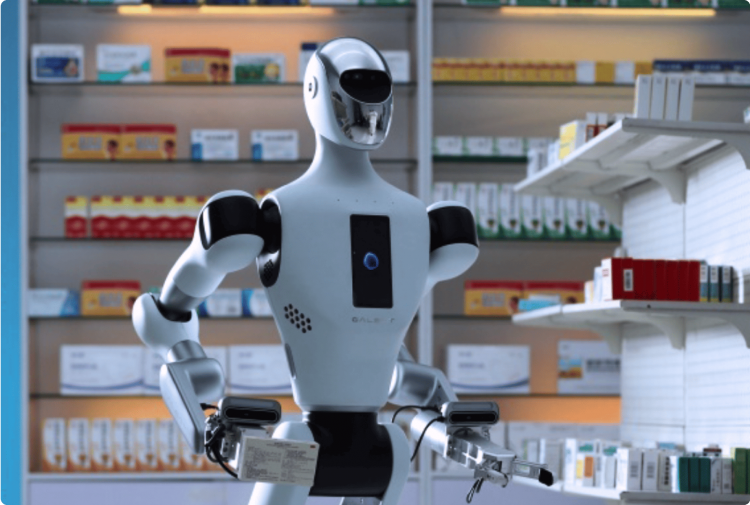

A new bipartisan bill in Congress would ban the U.S. government from buying or using humanoid robots made by Chinese companies, reflecting growing concern in Washington that advanced robotics could become the next major national security battleground. Republican Senator Tom Cotton and Democratic Senator Chuck Schumer planned to introduce the American Security Robotics Act, a measure aimed at keeping unmanned ground vehicles from foreign adversaries such as China out of federal operations. The bill would also bar the use of federal funds in connection with those robots, showing that lawmakers want to limit not just direct purchases but broader government involvement as well.
The proposal comes at a time when Chinese robotics firms are gaining visibility and competing more directly with U.S. companies in the race to build humanoid machines capable of doing work now performed by people. Chinese companies such as Agibot and Unitree are drawing attention as they push products designed for tasks ranging from dangerous manufacturing jobs to household chores. At the same time, American firms including Tesla are also investing heavily in humanoid robotics, making the sector an increasingly strategic industry rather than a niche area of technology.
Supporters of the bill argue that the issue is not just economic competition but also surveillance and remote-control risk.Cotton and Schumer said Chinese-made robots could gather sensitive data and potentially transmit it back to China, or even be controlled from abroad. That concern reflects a broader pattern in U.S. policy, where Chinese technology products are increasingly examined not only for what they do, but for who makes them, where the data may go, and whether they could create vulnerabilities inside government systems. A group of lawmakers had already urged the Pentagon last year to add Unitree to a list of firms linked to China’s military.
The political message behind the bill is unusually strong because it comes from senior figures in both parties. Cotton is one of the most powerful Republicans in the Senate, while Schumer is the chamber’s top Democrat. Schumer accused Chinese firms backed by the Chinese Communist Party of using a familiar strategy: flooding the U.S. market with technology that may create security, privacy, and industrial risks. In the House, Republican Representative Elise Stefanik was also set to introduce a companion bill, signaling that the effort could gain traction across both chambers of Congress.
Even so, the legislation is not a complete ban in every situation. The bill would allow exemptions for the U.S. military and law enforcement agencies to research Chinese robots, but only if the machines cannot send data to China or receive data from there. That carveout suggests lawmakers still want American agencies to study foreign robotics technology for defensive, intelligence, or testing purposes, while preventing operational use that might expose the government to security threats.
More broadly, the bill shows how robotics is joining semiconductors, artificial intelligence, telecom equipment, and social media platforms on the list of technologies caught up in U.S.-China rivalry. Humanoid robots are often presented as tools for productivity and innovation, but this debate shows they are also being viewed as possible vectors for espionage, industrial dependence, and foreign influence. If passed, the measure would mark another step in Washington’s effort to build a stricter technology boundary between the federal government and Chinese-made advanced systems.