
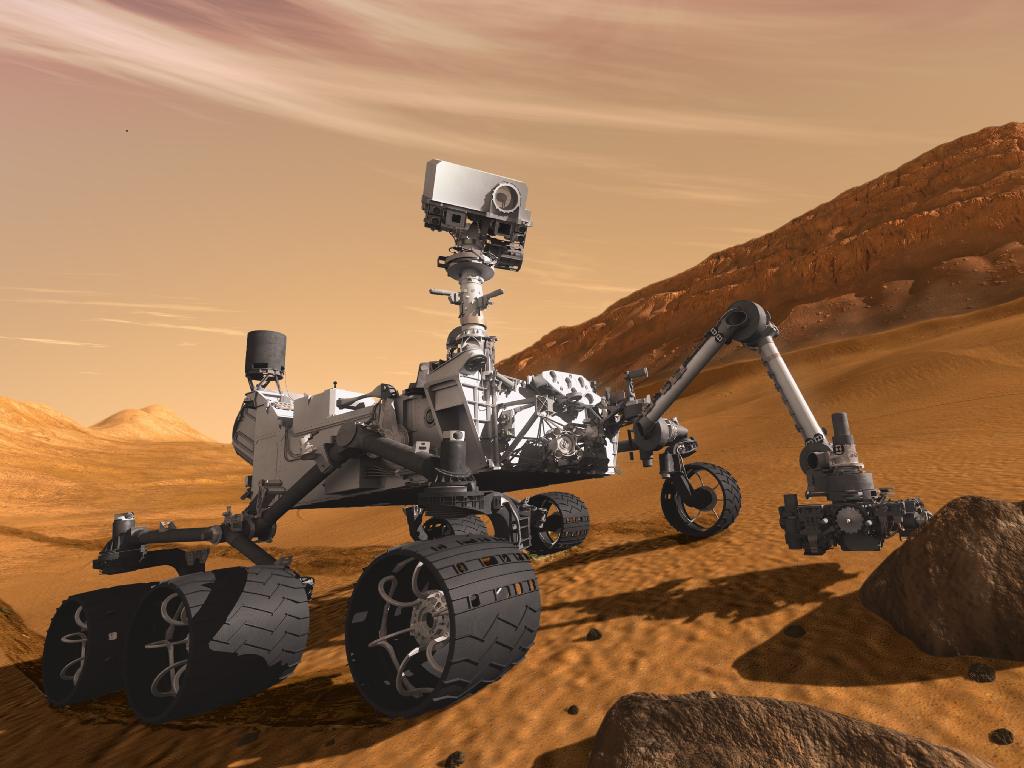

NASA’s Perseverance rover is close to completing a symbolic “Martian marathon,” having traveled nearly 26.22 miles, or 42.2 kilometers, across the surface of Mars since landing in Jezero Crater on February 18, 2021. The milestone highlights how far the rover has exceeded its original mission expectations, both literally and scientifically. What began as a mission planned for roughly one Martian year, or about 687 Earth days, has now stretched beyond five Earth years, with the rover still healthy and continuing to explore some of the most scientifically valuable terrain on the planet.
Perseverance landed in Jezero because scientists believe the crater once held a lake and river system more than 3.7 billion years ago. That made it one of the best places on Mars to search for evidence of ancient microbial life. Since landing, the rover has crossed crater floors, ancient river-delta deposits and now terrain beyond the crater rim, collecting samples and studying rocks that may preserve clues about whether Mars was once habitable. Its marathon-distance journey is therefore more than a mobility achievement. It represents years of careful exploration through environments that once may have had water, chemistry and conditions suitable for life.
One of the mission’s most important achievements has been collecting rock and soil samples for possible future return to Earth. Perseverance has gathered samples, including a sedimentary rock that may contain signs of ancient microbial activity, though scientists stress that final confirmation would require laboratory analysis on Earth. The rover can study chemistry and geology on Mars, but Earth-based instruments would allow far more detailed testing. That is why the mission remains closely tied to the broader, still uncertain effort to bring Martian samples home.
The rover has also delivered discoveries beyond its core life-searching mission. Perseverance has observed an aurora in visible light, detected electric discharges in the Martian atmosphere and studied organic molecules. These findings expand scientists’ understanding of Mars as an active planetary system, not just a frozen desert. They help reveal how its atmosphere behaves, how its surface chemistry works and how environmental conditions have changed over billions of years.
Perseverance is now operating outside Jezero Crater and examining rocks that may be more than 4 billion years old. That is especially valuable because rocks from the same period on Earth have largely been destroyed or transformed by plate tectonics, erosion and geological recycling. On Mars, ancient rocks can preserve a much clearer record of early planetary history. By studying them, scientists may learn not only about Mars, but also about the kinds of environments that existed when life was emerging on Earth.
The mission also benefited from its companion, the Ingenuity helicopter, which completed 72 flights and traveled about 10.5 miles before ending operations. Ingenuity proved that powered flight was possible on Mars and helped demonstrate new ways future missions might scout terrain ahead of rovers.
Overall, Perseverance’s approaching marathon mark is a powerful symbol of endurance, engineering and scientific ambition. The rover has driven farther and lasted longer than originally expected, while continuing to gather evidence about Mars’ watery past and possible biological history. Its journey shows that the search for life on Mars is not built on one discovery, but on years of patient exploration, sample collection and investigation across an ancient alien landscape.