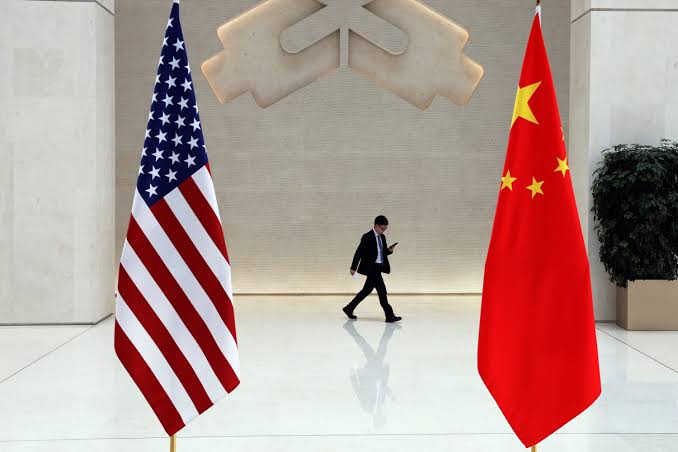

Relations between the United States and China are entering another period of heightened tension, with both governments exchanging accusations and adopting tougher measures. Yet behind the public confrontation, Washington and Beijing continue preparing for major diplomatic meetings and appear determined to prevent their rivalry from escalating into a complete rupture.
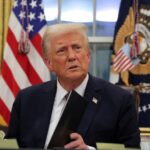
President Donald Trump recently accused China of carrying out what he described as an unprecedented compromise of American election information, claiming Beijing had gained access to hundreds of millions of U.S. voter records. China rejected the accusation as fabricated. The dispute added a new election-security dimension to an already strained relationship involving trade, technology, Taiwan and global influence.
Another confrontation emerged when the Department of Homeland Security finalized rules reducing the permitted length of stay for foreign journalists. Chinese reporters would face a particularly strict 90-day limit, compared with longer periods for journalists from most other countries. Beijing criticized the measure as discriminatory and warned that it could respond with reciprocal restrictions, raising concerns about further limitations on foreign media access in both countries.
China has also intensified its national-security campaign. In June, Chinese authorities detained American scholar Min Zin in Kunming on suspicion of espionage. His organization and the U.S. State Department disputed the allegations. The detention reflects Beijing’s broader effort to identify alleged foreign influence and intelligence activity, creating additional risks for American researchers, businesspeople and other visitors.
Despite these flashpoints, neither side currently wants to dismantle the relationship. Trump is reportedly interested in hosting Chinese President Xi Jinping for a state visit in September, potentially around the United Nations General Assembly. The U.S. president hopes to secure a major agricultural agreement that could benefit American farmers and strengthen his political position before the midterm elections.
Xi also has strong reasons to avoid another major confrontation. China’s economy recorded its weakest quarterly expansion in three years, with growth slowing to 4.3%. Investment has weakened, household consumption remains subdued and the country’s continuing property crisis has damaged confidence. A renewed trade or diplomatic breakdown with Washington would increase pressure on an economy already struggling to generate stronger domestic demand.
Taiwan remains one of Beijing’s principal priorities. Chinese officials are reportedly using Trump’s interest in the September visit as leverage to encourage Washington to continue delaying arms sales to Taipei. A proposed package valued at approximately $14 billion has reportedly been paused for months. Beijing hopes that a series of planned meetings will create further opportunities to persuade the administration not to proceed.
Both governments are also preparing for important international gatherings. China will host the Asia-Pacific Economic Cooperation leaders’ summit in Shenzhen in November, while Trump is expected to host the Group of 20 summit in Miami in December. These events give both sides incentives to maintain stability and preserve opportunities for direct engagement.
China also wants time to strengthen its technological capabilities, particularly in artificial intelligence. Xi has emphasized AI development and international technological initiatives, making a relatively calm relationship with Washington strategically useful. Every additional period without new sanctions, export restrictions or diplomatic crises gives Beijing more space to narrow the technological gap with the United States.
A recent U.S. decision involving Hong Kong offered another sign that the two governments are attempting to control tensions. The White House allowed a national-emergency declaration that had removed Hong Kong’s preferential treatment to expire, although most restrictions remained. China responded positively, suggesting both capitals are still searching for limited gestures that can preserve cooperation.
The relationship is operating on two parallel tracks: public confrontation and private planning. Washington and Beijing continue challenging each other, but their economic and political interests favor managed competition rather than immediate separation. The danger is that a concrete retaliatory action—especially over election interference, Taiwan or national security—could cause diplomatic tensions to overwhelm the fragile stability both governments are currently trying to maintain.