
The next generation of smart homes may do far more than automate lights, thermostats and appliances. According to energy experts and technology companies, connected homes are increasingly being designed to interact directly with the electrical grid, automatically adjusting energy use during periods of high demand while helping homeowners lower utility bills. Instead of acting solely as consumers of electricity, homes equipped with smart devices, batteries, electric vehicles and intelligent energy management systems could become active participants in balancing electricity supply and demand.
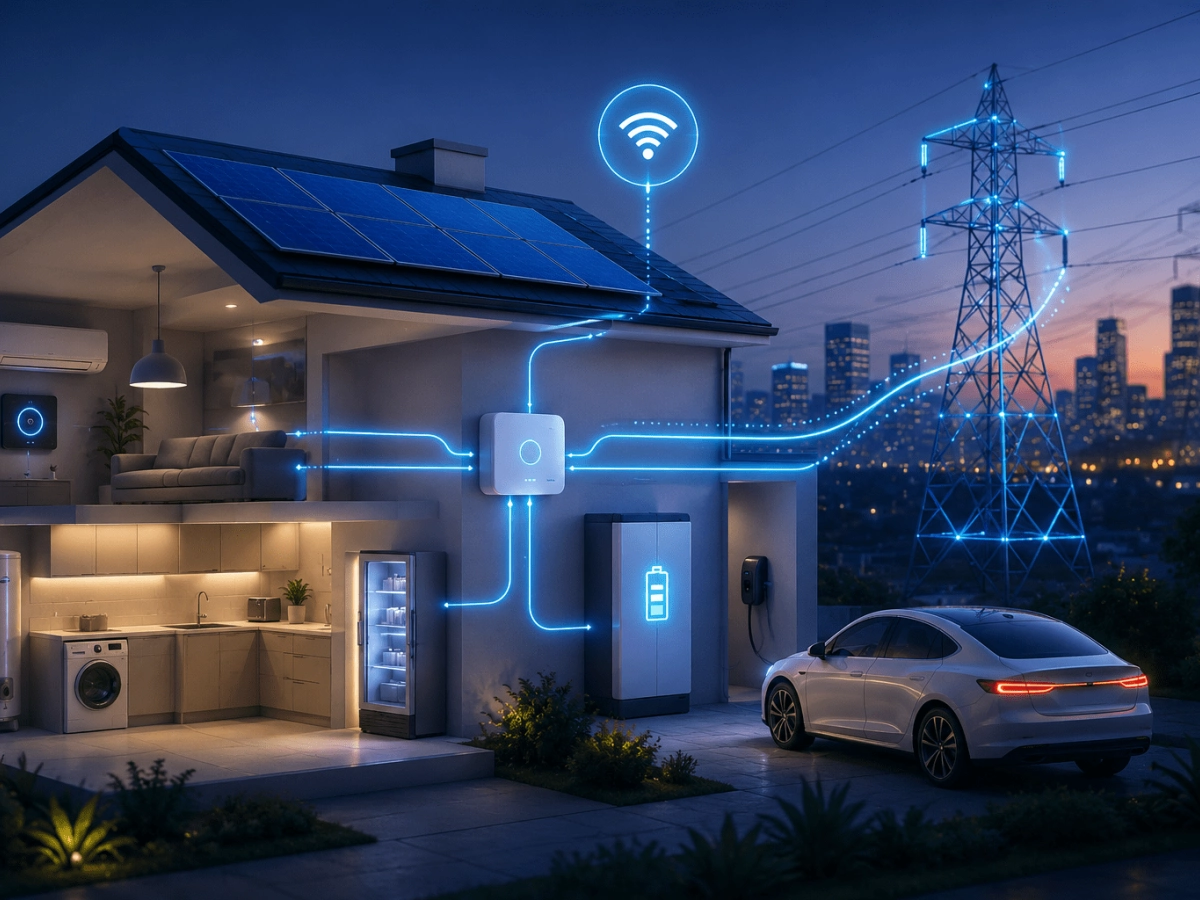
This concept is based on grid flexibility, a system in which connected devices communicate with utilities in real time. During periods of peak electricity demand—such as hot summer afternoons when air conditioners are running at full capacity—the utility could temporarily reduce the energy consumption of participating homes or draw electricity from home batteries and electric vehicles. In return, homeowners would receive financial incentives, lower electricity rates or direct payments for contributing energy or reducing demand.
Several technologies already make this possible. Smart thermostats can automatically adjust heating and cooling by a few degrees without significantly affecting comfort. Electric vehicle chargers can delay charging until electricity prices fall overnight. Home battery systems, such as those paired with rooftop solar panels, can store inexpensive electricity and later supply power back to the home—or potentially the grid—during expensive peak periods. Together, these technologies form what experts describe as a virtual power plant, in which thousands of homes collectively function like a traditional electricity generator.
Utilities are increasingly interested in these programs because electricity demand is growing rapidly. Expanding use of electric vehicles, data centers, artificial intelligence and home electrification is placing greater pressure on aging electrical infrastructure. Building new power plants and transmission lines requires years of planning and billions of dollars in investment. By comparison, encouraging existing customers to shift when they consume electricity can provide additional capacity much faster and at a lower cost.
Companies such as Google Nest, Ecobee, Tesla, Enphase, Sonnen and several utility providers are already testing or expanding demand-response and virtual power plant programs in parts of the United States, Europe and Australia. Early results suggest that coordinated networks of smart homes can significantly reduce peak electricity demand while improving grid reliability during extreme weather events or periods of heavy consumption.
For homeowners, the primary attraction is financial. Instead of simply paying electricity bills, consumers may eventually earn money by allowing approved devices to participate in grid-balancing programs. Depending on local utility incentives, participants could reduce annual electricity expenses by hundreds of dollars while helping avoid blackouts and reducing reliance on expensive emergency power generation.
However, several challenges remain before widespread adoption becomes reality. One major concern involves cybersecurity. Because millions of connected devices would communicate with utilities, protecting those systems from hacking or unauthorized access is essential. Privacy is another issue, as consumers may hesitate to share detailed information about household energy use. Industry experts emphasize that participation must remain voluntary and supported by strong data protection standards.
Compatibility also remains a hurdle. Many smart-home products currently operate within separate ecosystems that do not always communicate effectively with one another. Industry groups are promoting standards such as Matter to improve interoperability, allowing devices from different manufacturers to work together more seamlessly.
Governments and regulators also play an important role. Updated electricity market rules are needed so homeowners can be compensated fairly for providing flexibility services. Utilities must invest in advanced software capable of managing millions of distributed energy resources without compromising grid stability.
Overall, the evolution of smart homes represents a significant shift in how electricity systems operate. Instead of relying exclusively on centralized power plants, future grids may depend increasingly on millions of connected homes capable of storing, producing and intelligently managing energy. If widely adopted, this approach could lower electricity costs, improve grid reliability, reduce carbon emissions and transform homeowners into active participants in the energy economy rather than passive consumers.