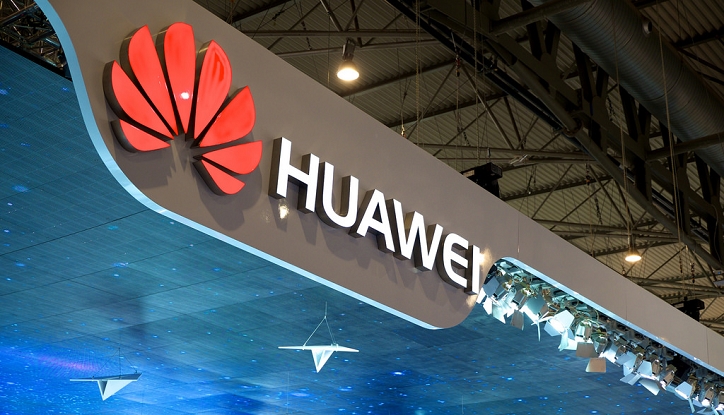

Chinese telecommunications giant Huawei is heading to trial in New York in one of the most consequential U.S. criminal cases ever brought against a Chinese technology company. Nearly eight years after American prosecutors first secretly charged the company, a federal jury will consider allegations involving Huawei’s business activities in Iran, bank and wire fraud, money laundering, racketeering and the alleged theft of trade secrets from American technology companies.
Jury selection begins September 8 in federal court in Brooklyn before U.S. District Judge Ann Donnelly. The trial is expected to last approximately three months and represents the culmination of a legal confrontation that has become intertwined with the much broader technological and geopolitical rivalry between the United States and China.
A central part of the government’s case concerns Huawei’s relationship with Skycom Tech, a company that conducted business in Iran.
American prosecutors allege Huawei effectively controlled Skycom while presenting it to international banks as an independent business partner. Prosecutors say this arrangement allowed Huawei to continue conducting business in Iran while moving money through financial institutions that could have faced sanctions-related consequences had they understood the true nature of the relationship.
The allegations gained international attention following the 2018 arrest of Huawei Chief Financial Officer Meng Wanzhou, daughter of company founder Ren Zhengfei, in Vancouver at the request of U.S. authorities.
Meng’s arrest triggered a major diplomatic crisis involving Washington, Beijing and Ottawa. She spent nearly three years in Canada before reaching a deferred-prosecution agreement with U.S. authorities in 2021 and returning to China.
That agreement is now significant to Huawei’s trial. In June, Judge Donnelly ruled that admissions Meng made as part of the 2021 arrangement could be introduced against Huawei. Meng acknowledged making misleading statements to a financial institution regarding Huawei’s relationship with Skycom and its activities in Iran.
The government’s allegations extend considerably beyond Iran.
Prosecutors accuse Huawei of participating in a long-running conspiracy to steal trade secrets from five American technology companies. The government claims Huawei sought proprietary information involving technologies such as internet routers, cellular antennas and robotics.
Huawei is also accused of misrepresenting its activities in North Korea, another country subject to extensive U.S. sanctions, and of providing surveillance equipment that Iranian authorities allegedly used to monitor protesters during demonstrations in Tehran in 2009.
The company denies wrongdoing.
Huawei has repeatedly argued that the U.S. prosecution is politically motivated and represents part of a broader American campaign designed to undermine a successful Chinese competitor. The company maintains that its international growth resulted from technological innovation and substantial research-and-development investment rather than criminal conduct.
That argument places the trial squarely within the larger U.S.-China technology confrontation.
Washington has spent years restricting Huawei’s access to advanced American technology, particularly semiconductors, while raising national-security concerns about the company’s telecommunications equipment. Huawei has consequently been largely excluded from the American telecom market and subjected to export restrictions intended to limit its access to cutting-edge chips and manufacturing technology.
Despite those restrictions, Huawei has demonstrated surprising resilience. It has expanded its domestic semiconductor capabilities and increased its presence in areas including artificial intelligence, smartphones and intelligent vehicles. Its ability to develop increasingly sophisticated technology despite U.S. restrictions has become an important symbol of China’s efforts to achieve technological independence.
The timing of the trial adds another geopolitical dimension. It begins as technological competition between Washington and Beijing intensifies and shortly before a planned meeting between President Donald Trump and Chinese President Xi Jinping.
For American prosecutors, however, the case is fundamentally about corporate conduct rather than geopolitical competition. They will attempt to convince jurors that Huawei systematically deceived banks, circumvented restrictions and acquired American technology through unlawful means.
Huawei will have the opportunity to challenge that evidence and defend itself before a jury. The allegations remain accusations unless prosecutors prove them beyond a reasonable doubt.
The stakes extend far beyond a single corporate defendant. The trial will test whether one of China’s most important technology companies built part of its global success through legitimate innovation, as Huawei maintains, or through a pattern of deception and illegal conduct, as U.S. prosecutors allege.
Whatever the verdict, the proceedings are likely to become another defining chapter in the increasingly consequential struggle between the United States and China over technology, national security and global economic power.