
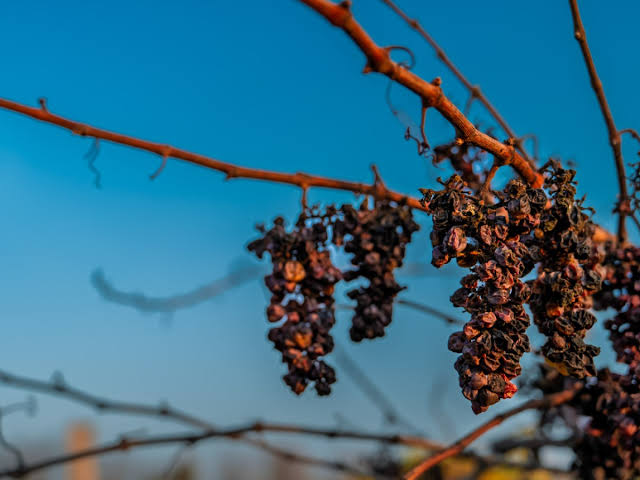

A Pennsylvania grape farmer is facing the possibility of watching roughly 1,600 tons of Concord grapes rot on the vine, a dramatic example of how changing consumer habits are reshaping one of America’s historic fruit-growing regions.
Mark Terrell owns a 200-acre vineyard near North East, Pennsylvania, along the shores of Lake Erie. Normally, this time of year would mean harvesting millions of grapes destined for juice production.
Instead, his harvesting equipment is sitting idle.
The crisis began after beverage company Refresco canceled contracts with Terrell and about 125 other growers in northwestern Pennsylvania and western New York.
Refresco said the decision followed a review of inventory, market demand and long-term supply needs. The company also said sales of Concord grape juice have declined roughly 30% over the past decade.
For Terrell, the timing was devastating.
Farmers had already spent heavily pruning, fertilizing and maintaining their vineyards when the contracts disappeared. Terrell, who has around 120,000 grapevines, estimates that his unsold crop represents at least 200 million individual grapes.
His situation reflects a much broader problem.
Consumers have gradually reduced their consumption of fruit juice and wine, partly because of concerns over sugar and changing health habits. During the pandemic, however, demand temporarily rose, encouraging some growers to expand production.
When consumption dropped again afterward, the industry was left with too much fruit and too few buyers.
The Lake Erie region is particularly exposed because it is the nation’s second-largest grape-growing area after California and has been cultivating grapes for generations.
Around 500 grape farms operate between Erie, Pennsylvania, and Buffalo, New York. In communities such as North East, the Concord grape is not simply an agricultural product but an important part of local identity and employment.
Government assistance has provided only partial relief.
Pennsylvania allocated $500,000 to buy about 350 tons of surplus grapes from a small group of farmers, with the fruit destined to become juice concentrate for food banks.
The federal government has also committed $20 million to purchasing surplus Concord grape juice.
But farmers argue that buying already-processed juice does little to solve the immediate problem of fresh grapes that must be harvested and processed quickly before they spoil.
Finding new markets is difficult.
Concord grapes have a relatively short shelf life, and once harvested they generally need to be processed within hours. Some growers have considered public picking events, but the scale of production makes that impractical as a serious solution.
Researchers and agricultural officials are now exploring alternative uses for excess grapes, including compost, animal feed and food ingredients.
Switching crops is another possibility, but it would be costly and risky.
The rocky soil around Lake Erie is particularly well suited to grapes, and removing established vines would require major investment. Farmers would then have to find replacement crops capable of succeeding in the same conditions.
Selling the land is not necessarily an easy answer either, especially in rural communities with aging or declining populations.
Terrell has significant financial exposure.
He purchased his farm for about $1 million in 2012 and later invested approximately $500,000 in harvesting equipment. He also faces major mortgage and operating expenses and has already laid off workers following the contract cancellation.
He says he may be able to cover one bad year using savings, but another failed harvest could threaten his family’s financial survival.
His experience reveals how quickly a shift in consumer behavior can destabilize an agricultural system built over generations.
The immediate image is striking: millions of ripe grapes left hanging with no buyer.
But the deeper issue is larger.
If demand for Concord grape products continues falling, farmers across the Lake Erie region may have to abandon vineyards, sell land or fundamentally reinvent how their crops are used.
For communities that have depended on grape farming for more than a century, the current glut is therefore not just about wasted fruit. It is a warning that an entire agricultural economy — and a way of life built around it — may need to change.