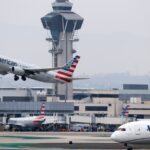
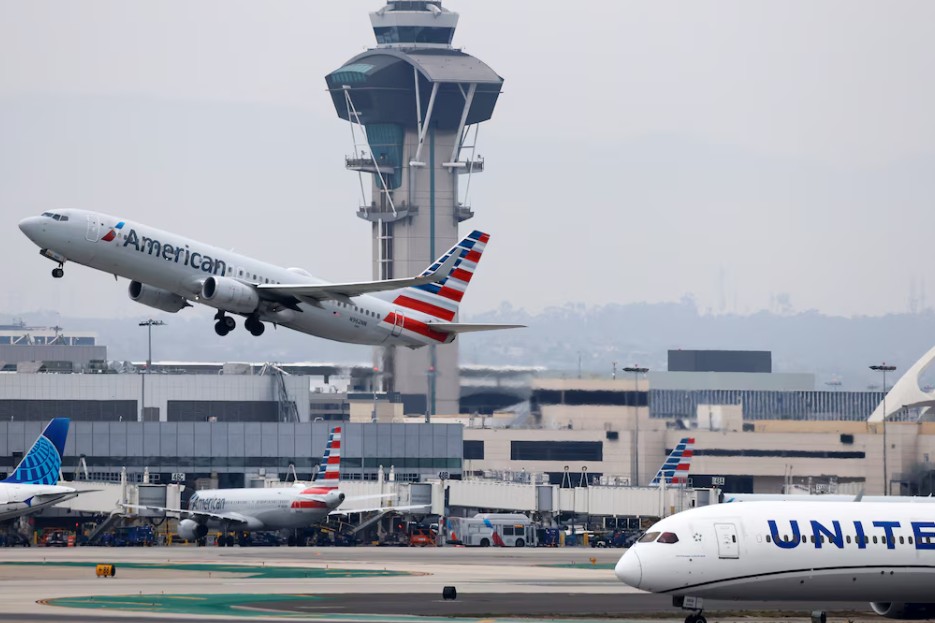

The United States is facing renewed concerns about the reliability of its aviation infrastructure after a major technical failure forced the Federal Aviation Administration (FAA) to temporarily ground flights nationwide, disrupting thousands of journeys and triggering a political confrontation over federal transportation spending.
According to data, the Trump administration is requesting $50 billion to modernize the country’s aging air traffic control system, while Democratic lawmakers are demanding greater accountability over billions already allocated to infrastructure improvements.
The crisis has exposed longstanding technological vulnerabilities within one of the world’s busiest aviation networks. On November 13, 2026, federal aviation authorities ordered a nationwide ground stop after technical problems disrupted communications and radar information essential to managing air traffic.
The shutdown lasted approximately five hours, affecting thousands of flights and potentially more than 1.5 million travelers. More than 3,000 aircraft were safely landed, while hundreds of flights were diverted.
Airlines subsequently faced operational challenges involving displaced aircraft, unavailable crews and extensive scheduling disruptions. The incident raised concerns about the resilience of critical transportation infrastructure and the economic consequences of widespread technological failures.
Preliminary findings indicated that the disruption involved overloaded communications equipment associated with upgrades to older systems. Investigators are examining how changes to network infrastructure contributed to the breakdown.
Transportation Secretary Sean Duffy acknowledged that significant questions remained unanswered while emphasizing the need to replace outdated equipment. Officials reported no evidence that a cyberattack caused the shutdown. The incident highlighted the difficulties of modernizing essential infrastructure without interrupting services that millions of people depend upon daily.
President Donald Trump responded by calling for substantial additional federal investment to overhaul the air traffic control system. His administration argues that decades of insufficient modernization have left the FAA dependent on aging technology.
However, Democratic lawmakers question why the administration needs another $50 billion after Congress previously approved major funding packages. Those include $12.5 billion authorized in 2025 for FAA modernization and additional infrastructure funding approved during the Biden administration.
The disagreement centers on whether new appropriations are necessary and how effectively existing resources have been managed. The shutdown also renewed scrutiny of the FAA’s recently introduced SMART artificial intelligence system.
The $875 million platform is designed to analyze flight schedules, weather conditions and other information to help anticipate potential disruptions. However, federal officials and the technology developer, Air Space Intelligence, stated that SMART was not responsible for the nationwide grounding.
The distinction is important because the incident occurred during a period of increasing reliance on advanced digital systems. Experts emphasize that introducing new technology requires careful testing, reliable backup systems and strong human oversight.
The aviation crisis arrives during a politically sensitive transition following Republican losses in the November midterm elections.
Democrats are preparing to assume control of Congress in January 2027, potentially increasing scrutiny of the administration’s transportation policies and spending decisions. Lawmakers from both parties recognize the importance of aviation safety, but disagreements over funding and accountability could complicate modernization efforts.
The disruption demonstrates how failures in essential technological systems can quickly affect transportation, business operations and public confidence. Modernizing aviation infrastructure will require sustained investment, effective oversight and careful coordination between government agencies and private contractors.