
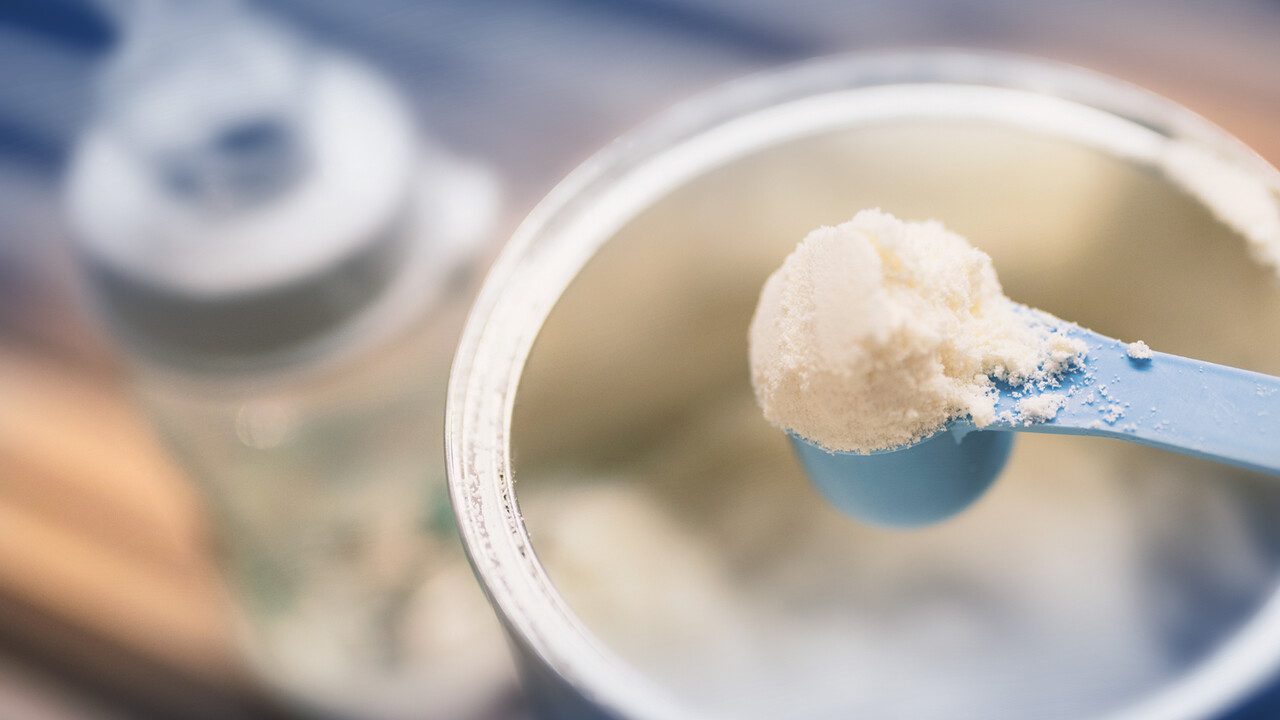

A new federal analysis has found that the U.S. infant formula supply appears safe after extensive testing for heavy metals, pesticides, and other potential contaminants. Food and Drug Administration reviewed more than 300 samples of commercial infant formula collected between 2023 and 2025 and found either undetectable or very low levels of the substances it tested for. Federal officials and outside experts said the results should reassure parents, especially after earlier reports had raised concern about contamination in some products.
The testing was carried out as part of the FDA’s Operation Stork Speed project, one of the agency’s largest and most rigorous review of infant formula contaminants to date. The review looked for heavy metals including lead, arsenic, cadmium, and mercury, as well as pesticides, phthalates, and PFAS, the group of industrial compounds often called “forever chemicals.” FDA found that heavy metal levels were well below U.S. Environmental Protection Agency limits for drinking water, pesticides were absent in 99% of samples, and 25 of the 30 PFAS compounds tested were not detected at all.
That overall conclusion led some experts to say parents should not hesitate to use formula that is available in the United States. Dr. Steven Abrams, a pediatrics professor at the University of Texas at Austin who reviewed the findings, said there is “no reason not to use any available formula” in the country. His view reflects a broader expert judgment in the story: while no food supply is likely to be completely free of every trace substance, the levels found here were not seen as a reason for alarm.
At the same time, the results do not end the debate. Some specialists welcomed the findings but said certain detections still matter, especially for synthetic chemicals that do not occur naturally in the environment. Dr. Sheela Sathyanarayana of UW Medicine and Seattle Children’s Research Institute, who said the presence of some compounds at all is concerning and points to the need for continued monitoring of formula and the broader U.S. food supply. So the study is reassuring, but not a signal that scrutiny should stop.
The issue has become especially sensitive because consumer trust in infant formula was already strained. Last year Consumer Reports published its own analysis of 41 U.S. infant formulas and suggested many had worrying levels of heavy metals and other contaminants. But Consumer Reports used its own threshold for concern, one set far below European Union standards. According to Abrams, that report drew major public attention and even led some parents to stop using commercial formula when it was still necessary. The FDA’s new analysis appears partly aimed at resetting that conversation with a larger federal data set.
Still, FDA does not currently have enforceable limits for heavy metals in infant formula, unlike the European Union, Canada, and Australia. Consumer advocacy groups have long pushed the agency to establish firm rules, and even Abbott, one of the country’s largest formula manufacturers, urged the FDA to adopt scientific standards for contaminants. That means the new findings may calm fears in the short term while also strengthening the case for clearer federal benchmarks in the future.
Overall, the FDA review is good news for parents and caregivers. The current infant formula supply tested as safe, with low or undetectable contaminant levels across hundreds of samples. But the findings also reinforce a second message: continued testing, transparency, and stronger standards may be needed to sustain confidence in one of the most essential parts of the U.S. food system.