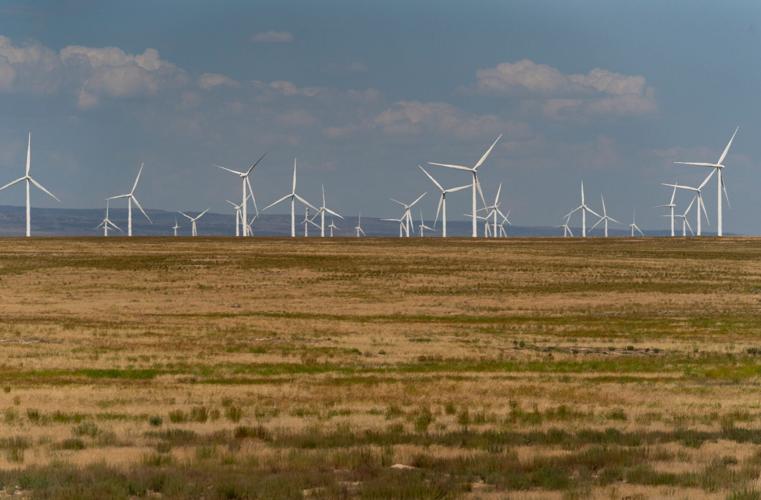

More than 250 onshore wind energy projects across the United States are stalled because the Pentagon has not completed required national security reviews, according to the American Clean Power Association. The delays affect projects in more than 30 states and represent at least 30 gigawatts of potential electricity capacity, enough to power millions of homes. The issue has become another front in the Trump administration’s broader conflict with wind energy, which the president has repeatedly criticized while favoring fossil fuel development.
The stalled projects are not being blocked through a formal nationwide ban. Instead, the problem appears to be a breakdown in the review process that wind developers must pass before moving forward. The Department of Defense and the Federal Aviation Administration are supposed to assess whether proposed wind turbines could interfere with radar systems, military flight paths, training zones, or other national security operations. The industry group says those reviews have effectively stopped moving, leaving projects unable to proceed even when developers are willing to negotiate mitigation agreements.
This matters because many wind projects are already in advanced stages and depend on final approvals to qualify for financing, begin construction, or meet clean energy tax credit deadlines. Developers say they are not asking the Pentagon to ignore national security concerns. They argue that the government has traditionally worked with companies to resolve conflicts through turbine placement changes, radar upgrades, operational limits, or other technical solutions. The current problem, according to the industry, is that meetings, negotiations, and sign-offs have slowed or halted, creating uncertainty that threatens investment.
The Pentagon says the reviews are complicated and that delays have been affected by factors including past government shutdowns. It also says it is working to complete evaluations efficiently. But the renewable energy industry sees the slowdown in a political context. Trump has long attacked wind power, calling it unreliable and expensive, and his administration has also taken action against offshore wind projects. That history makes developers and clean energy advocates suspicious that the delays are not simply administrative.
The scale of the freeze could have major consequences for energy supply. Electricity demand in the United States is rising because of data centers, artificial intelligence, industrial growth, and broader electrification. Wind power is one of the fastest ways to add large amounts of electricity to the grid, especially in rural areas where projects can be built at scale. If hundreds of wind projects remain stuck, utilities may have fewer options to meet demand, potentially increasing reliance on gas, coal, or more expensive power sources.
The situation also shows how national security reviews can become a powerful bottleneck for energy development. Wind turbines can create real concerns for radar and military operations, especially near bases or flight routes. But when the review system stops functioning smoothly, even projects that could be modified or approved with conditions can become trapped. That can discourage investors, delay local tax revenue, and weaken confidence in the permitting process.
The broader political conflict is clear. The Trump administration has promoted fossil fuels and criticized renewable energy, while states, utilities, and developers are trying to build more clean power to meet demand and climate goals. The Pentagon review delays allow the administration to slow wind development without necessarily issuing a direct order against the industry.
Overall, the story is about more than paperwork. It is about whether the federal government will keep clearing a path for clean energy projects or use national security reviews as a brake on wind power. For developers, the uncertainty is already costly. For the energy system, the risk is that badly needed electricity capacity remains stuck before it can reach the grid.