
A federal judge has intervened in President Donald Trump’s ambitious plans to transform a historic public golf course in Washington, D.C., ordering a temporary halt to tree removal after raising serious concerns about the administration’s transparency and compliance with judicial oversight.
The dispute centers on East Potomac Golf Links, a 106-year-old public golf facility near the National Mall that the Trump administration wants to redevelop into a championship-level course capable of hosting major international tournaments.
On October 12, U.S. District Judge Ana Reyes ordered an immediate 24-hour suspension of tree-cutting operations following a contentious three-hour emergency hearing.
The judge sharply criticized federal officials for proceeding with extensive tree removal over the holiday weekend despite ongoing litigation and limited notification to the court.
On October 13, Reyes extended the suspension until October 26, preventing additional tree-cutting while the legal dispute continues.The controversy intensified after the National Park Service began removing trees as part of the proposed redevelopment.
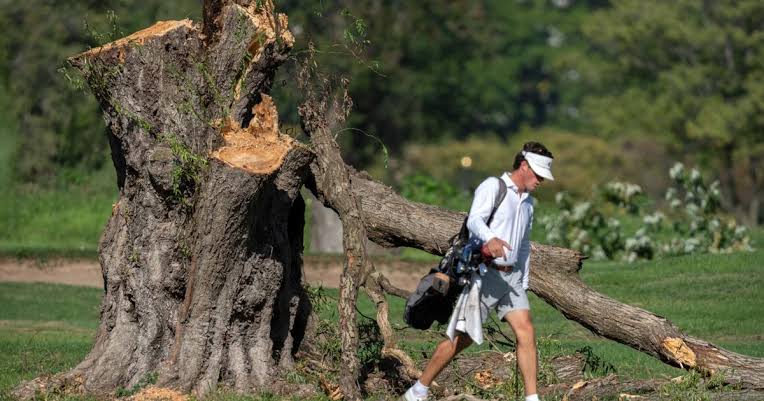
According to court proceedings, at least 400 trees were cut down over the holiday weekend, with several hundred additional removals contemplated.
The Interior Department maintains that the work is part of a previously developed landscape restoration plan intended to preserve the course’s historic character.
Officials say the project will remove trees that do not contribute to the historic landscape while protecting important features, including historic cherry trees.
The department also argues that selective vegetation removal will reopen views toward the Washington Monument, the Potomac River and other landmarks.
However, preservation organizations question whether the extensive tree removal constitutes routine maintenance or a major alteration requiring additional environmental and historic-preservation reviews.
President Trump has expressed interest in transforming East Potomac into a world-class golf destination.
In June, he suggested that the redesigned course could eventually accommodate prestigious competitions, including the U.S. Open, the Ryder Cup and the PGA Championship.
The project forms part of a broader initiative to reshape prominent public spaces in Washington, including plans for a new White House ballroom and a monumental arch. Supporters of the golf course renovation argue that modernization could improve the facility’s quality, restore historic views and attract major sporting events.
Critics, however, worry that converting an affordable public golf course into an elite championship venue could increase fees and reduce accessibility for ordinary residents.
The course has historically served golfers from different economic backgrounds, making public access a central concern. The lawsuit was brought by the DC Preservation League and two local golfers, who argue that the administration’s renovation plans could violate legal protections governing the historic park.
The plaintiffs have sought court intervention to prevent irreversible changes before the legal questions are resolved.
Judge Reyes had previously declined requests to suspend construction activities, relying on assurances that the government would provide appropriate notice.
The sudden acceleration of tree-cutting operations changed that position.
During the October 12 hearing, Reyes expressed frustration with the administration’s conduct and questioned why the work needed to proceed urgently during a holiday weekend.
Testimony identified Interior Department Deputy Chief of Staff Greg Wischer and National Park Service Acting Director Jessica Bowron as officials involved in the decision-making process.
The judge has requested additional explanations about the authorization and timing of the work.
Her October 13 order also requires the government to provide three business days written notice before making irreversible changes to permanent features of the golf course.
The dispute highlights competing priorities involving historic preservation, federal land management and presidential redevelopment initiatives.
Federal officials argue that the project represents legitimate restoration and modernization of a public recreational facility.
Preservation advocates maintain that significant changes to historically protected public spaces should undergo transparent review and comply with applicable legal requirements.
The court has not issued a final ruling on whether the entire redevelopment project is lawful.
For now, the immediate restriction concerns tree removal and advance notification of irreversible work. The case illustrates how the future of Washington’s historic public spaces is becoming a legal question as well as a debate over development, preservation and public access.