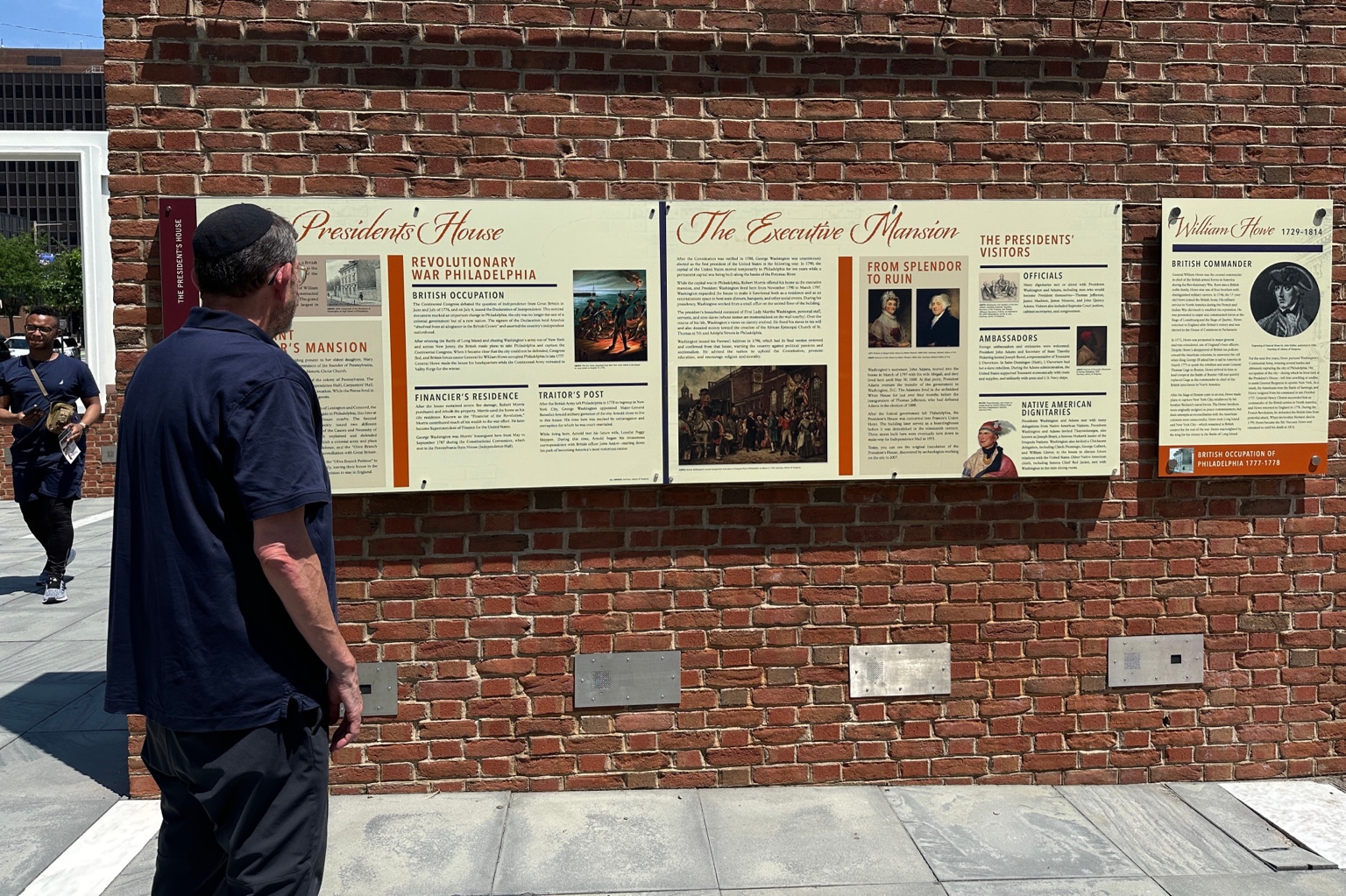

The Trump administration has installed a revised exhibition about slavery at the site of George Washington’s former Philadelphia residence, reigniting a national debate over how the United States presents the most painful contradictions of its founding history. The new panels replaced an earlier display that focused heavily on the lives of the nine enslaved people who lived and worked in Washington’s presidential household during the 1790s.
The President’s House site is located near Independence Hall and the Liberty Bell, where millions of visitors encounter the story of American independence. Washington lived there while Philadelphia served as the nation’s capital, bringing enslaved workers from his Mount Vernon estate to maintain the presidential household. The original exhibit, installed in 2010, examined both Washington’s political achievements and his participation in slavery, emphasizing the tension between the nation’s promises of liberty and the continued enslavement of African Americans.
Federal workers installed the revised panels overnight, without a public announcement. Philadelphia Mayor Cherelle Parker criticized the timing and accused the government of acting secretly because it understood that the changes would provoke public outrage. She said the replacement damaged community trust and promised that city officials would continue challenging the administration’s actions.
The new exhibition still acknowledges slavery and includes information about the enslaved people who lived at the property. However, historians, local leaders and civil rights advocates argue that its language is less direct and reduces the prominence of slavery’s brutality. Earlier panels included titles such as “The Dirty Business of Slavery,” descriptions of physical and sexual violence, and maps showing the operation of the transatlantic and domestic slave trades. Those elements were removed or softened in the revised version.
The Department of the Interior defended the changes, saying the new panels provide a broader historical account rather than presenting the nation’s founding primarily through its injustices. Officials maintain that the exhibition continues to address slavery while also giving more attention to Washington’s accomplishments, the development of the presidency and the country’s progress toward greater freedom.
The revision followed President Donald Trump’s 2025 executive order directing federal museums and historical sites to remove material that the administration believes improperly disparages Americans or presents the country’s past through a partisan ideological perspective. Supporters of the policy argue that historical institutions should celebrate national achievements while still recognizing past wrongdoing. Critics contend that the effort is designed to sanitize slavery, racism and other difficult parts of American history.
The dispute also produced a prolonged legal battle. Philadelphia officials argued that the federal government could not change the exhibit without consulting the city, which helped finance and develop the memorial. A federal judge initially ordered much of the original material restored, but an appeals court later allowed the administration to install its revised version.
Advocates for the original exhibition say the most important issue is whose experiences receive attention. The memorial was created partly to restore the identities of enslaved people who had long been excluded from traditional accounts of Washington’s presidency. They fear that shifting the focus back toward the president’s achievements will once again push those individuals to the margins.
The controversy extends far beyond one historical location. It reflects a broader political struggle over whether public institutions should emphasize patriotic unity or directly confront the violence and inequality embedded in America’s development. The revised panels may remain in place, but the debate over historical truth, national identity and the legacy of slavery is unlikely to end.