
The U.S. Supreme Court dealt Donald Trump a major defeat on tariffs, ruling that he did not have authority to unilaterally impose sweeping global import duties by declaring a national emergency. The ruling struck at a core pillar of Trump’s economic strategy, immediately upended the leverage his administration had used for months to pressure other governments in trade talks.
At the heart of the decision is the administration’s use of the International Emergency Economic Powers Act (IEEPA) as the legal basis for broad, peacetime tariffs. In the Court’s opinion, the government effectively conceded the president has no inherent authority to impose tariffs in peacetime, and the statute Trump relied on does not supply that power. The opinion anchors its reasoning in the Constitution’s allocation of taxing and tariff authority to Congress.
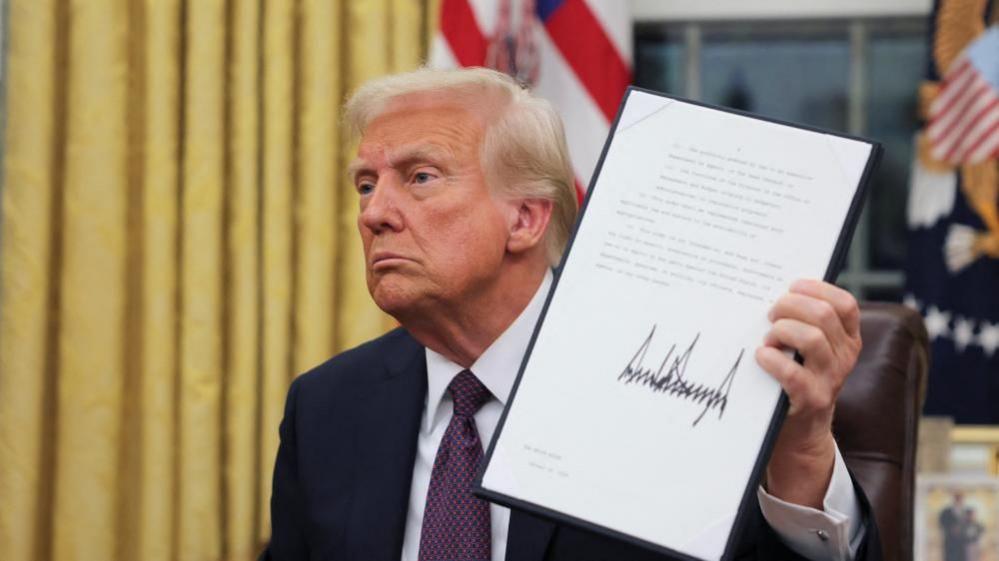
Trump reacted with anger, criticizing individual justices and insisting the decision was “ridiculous,” while pledging to continue his global trade confrontation. Despite the rhetoric, he complied procedurally: he signed an executive order repealing the tariffs struck down by the Court.
But the policy shift did not mean an end to tariffs. Within hours, Trump announced a new temporary 10% tariff on imports from essentially all countries, on top of existing tariffs, and issued a proclamation putting it into effect. The White House said the new levy includes exemptions for certain categories such as critical minerals, metals, and energy products. Apparently, Trump invoked Section 122 of the Trade Act of 1974, a rarely used provision that can allow tariffs of up to 15% for up to 150 days to address “fundamental international payments problems,” though the move could still face legal challenges and any extension would require congressional authorization.
Markets briefly welcomed the Court’s decision—stocks jumped on the initial relief—and investors quickly pivoted back to concern as the administration’s fast replacement tariff injected another round of uncertainty into global trade expectations. Analysts warned that the sequence of court defeat, immediate new tariff would keep businesses guessing about the direction, durability, and legal footing of U.S. trade policy.
A second major question is money already collected. The question is about $175 billion in tariff revenue collected from importers under the invalidated approach, raising the prospect of large-scale refund claims and prolonged litigation over repayment mechanics.
In short, the ruling is both a constitutional statement—reaffirming that tariff-setting power primarily sits with Congress—and a practical jolt to trade policy, forcing the administration to search for alternative legal pathways while businesses, consumers, and trading partners brace for continued volatility.