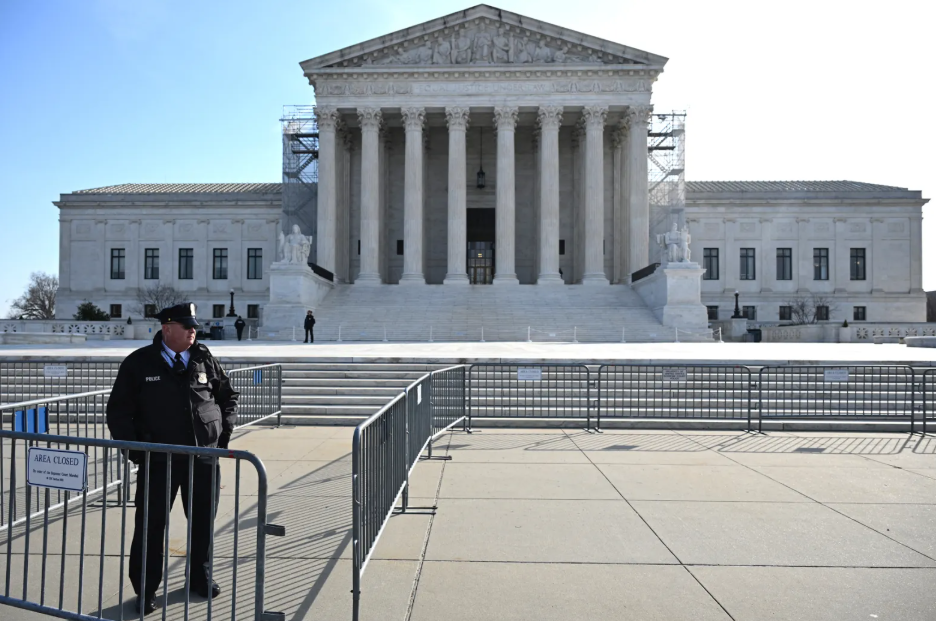

The U.S. Supreme Court is asking Congress for a significant funding increase aimed at strengthening both physical security and cybersecurity, reflecting growing concern about threats facing the justices, their families and the court itself. The court is seeking an additional $25.4 million as part of the federal judiciary’s broader $9.7 billion budget request for fiscal year 2027, which begins on October 1. Of the requested total, $204.5 million in discretionary funding would be allocated to the Supreme Court.
A major share of the new money would go toward expanding the work of the Supreme Court Police, the court’s in-house security force. $14.6 million would fund a substantial increase in protection capacity, including six additional agents per justice and one new administrative support position. The court also wants funding for 25 more officers to improve security at the Supreme Court building itself, along with four more administrative roles to support the agency’s recent growth. The proposal would also pay for travel related to protecting justices when they are away from Washington, D.C.
The request includes other security upgrades as well. The court wants $2 million for a new regional command post that would coordinate assignments, manage protection coverage and improve response time during emergencies. In addition, the Supreme Court is seeking $2.3 million more for cybersecurity improvements and $6.5 million to support the design of a visitor-screening facility for the court building. That facility is intended to address recommendations made in physical security assessments, suggesting the judiciary is trying to modernize its defenses in response to a more complex threat environment.
The request comes amid a broader rise in threats against members of the judiciary. The rest of the federal court system is seeking $920.9 million for security, a 3.2% increase from the prior fiscal year. The judiciary said incidents of significant concern involving judges are on pace to rise again this year after jumping 57% in 2025, based on U.S. Marshals Service data. The Supreme Court’s own budget documents say the added funding is needed because of “increasing risks” and because responsibility for residential protection has shifted earlier than expected from the U.S. Marshals Service to the Supreme Court Police.
That concern is rooted in recent events. Congress in 2022 approved legislation expanding police protection for the families of justices and senior court officers after the leak of a draft opinion in the case that overturned Roe v. Wade sparked protests outside justices’ homes. A California man was sentenced last year to more than eight years in prison after admitting he traveled to Justice Brett Kavanaugh’s home in 2022 intending to assassinate him. Those developments helped intensify the court’s focus on personal security and likely explain why residential protection has become such a central priority.
At the same time, another $30 million in Supreme Court security funding has been stalled in the Senate. Money was included in a Department of Homeland Security funding bill that has not yet passed because of a wider immigration reform dispute that contributed to a partial government shutdown. Altogether, the new budget request shows a court trying to respond to a more dangerous and politically charged climate by investing heavily in both physical protection and digital defense.