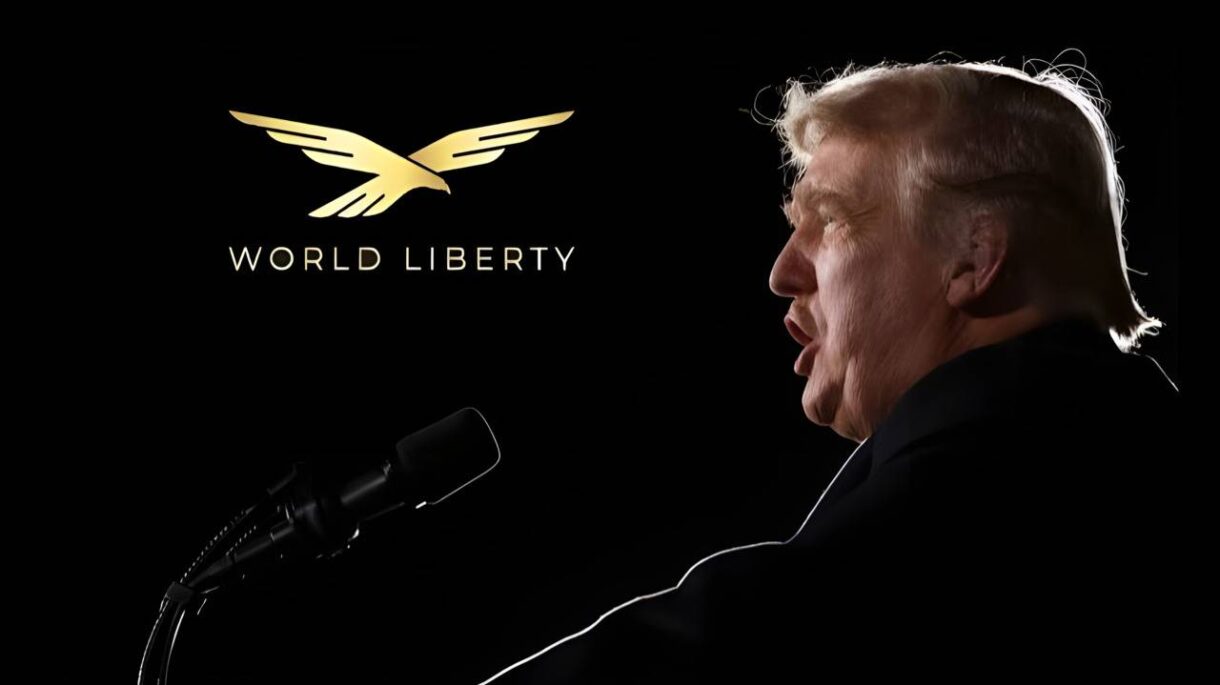

A cryptocurrency company backed by President Donald Trump and his family is collaborating with a Hong Kong-based artificial-intelligence venture that provides access to AI models developed by Chinese technology companies the Trump administration itself has identified as potential national-security or intellectual-property risks. The relationship is raising questions about the intersection of the Trump family’s private business interests and the administration’s increasingly complicated technology policy toward China.
The company at the center of the controversy is World Liberty Financial, a crypto venture co-founded by members of the Trump family. World Liberty is collaborating with WorldClaw, a Hong Kong-based AI platform established earlier this year. WorldClaw allows customers to access dozens of artificial-intelligence models and accepts World Liberty’s USD1 stablecoin as one method of payment.
According with WorldClaw’s platform, 43 of the 90 AI models available were created by Chinese companies, including Alibaba, Baidu, Z.ai and other developers that have faced scrutiny from the U.S. government. WorldClaw also provides models developed by major American AI companies, including OpenAI and Anthropic.
Several of the Chinese companies have particularly sensitive relationships with Washington. Alibaba and Baidu have been designated by the U.S. Defense Department as Chinese military-aligned companies, preventing the Pentagon from conducting business with them. Z.ai, previously known as Zhipu AI, appears on the Commerce Department’s Entity List, significantly restricting its access to American technology. Chinese companies and Beijing have disputed various U.S. allegations concerning military relationships and intellectual-property theft.
Importantly, here is nothing illegal about the collaboration. Chinese AI models are generally legal for American individuals and businesses to use, and platforms offering models from multiple international developers are common within the technology industry. World Liberty said WorldClaw is an independent company and argued that providing customers with different AI options is a widely accepted business practice.
Nevertheless, the financial relationship is attracting attention because of Trump’s position as president. The Trump family owns 38% of World Liberty Financial and benefits financially from sales and usage of its cryptocurrency products. WorldClaw customers can pay for AI services using USD1, World Liberty’s dollar-backed stablecoin. World Liberty can generate income from the assets supporting USD1, potentially creating an indirect financial benefit for the Trump family when the currency’s adoption expands.
However, Donald Trump Jr. and Eric Trump have publicly promoted WorldClaw, while a World Liberty executive has served as an outside adviser to the company.
The situation has prompted criticism from technology, trade and government-ethics specialists. Critics argue there is an apparent contradiction between an administration warning that certain Chinese AI companies pose national-security threats and a Trump family business benefiting from a platform that helps distribute their technology.
The White House rejects suggestions of a conflict. Apparently, Trump acts in the interests of the American public. WorldClaw similarly emphasized that making an AI model available does not amount to endorsing its developer.
Security specialists also warn that using some Chinese AI systems could potentially expose users to risks involving data monitoring, censorship or malicious software. WorldClaw says it applies privacy and security safeguards, although its website indicates that user inputs may be shared with companies supplying the underlying models.
The controversy ultimately illustrates the increasingly complicated relationship between AI, cryptocurrency, U.S.-China competition and presidential business interests. As Washington attempts to protect American technological leadership while maintaining economic ties with China, World Liberty’s involvement with WorldClaw raises a fundamental question: whether the commercial activities of a president’s family can remain clearly separated from the national-security policies pursued by his administration.