
American military divers and forensic specialists are undertaking an extraordinarily difficult underwater mission in the Philippines to recover the remains of approximately 250 U.S. prisoners of war who died aboard the Oryoku Maru, a Japanese transport ship sunk during World War II. More than eight decades after the tragedy, the operation offers families renewed hope that their missing relatives may finally be identified and returned home.
The Oryoku Maru was one of more than 100 Japanese vessels later known as “hellships” because of the brutal conditions endured by Allied prisoners transported aboard them. On December 13, 1944, Japanese forces loaded an estimated 1,619 Allied POWs—most of them Americans—onto the ship in Manila as Japan attempted to move prisoners before U.S. forces recaptured the Philippines. Many had already survived years of captivity and the Bataan Death March.
Prisoners were crowded into poorly ventilated cargo holds with little water, food or space. Men suffered from suffocation, extreme heat and dehydration as they were packed tightly together. The ship also carried merchant sailors, civilians and crew members, although incomplete and contradictory wartime records make it difficult for investigators to determine exactly who was aboard and who died in the wreck.
U.S. aircraft attacked and sank the vessel near Subic Bay in December 1944, apparently unaware that American and Allied prisoners were inside. Some POWs survived the sinking but were later placed aboard other ships and transported under similarly horrific conditions. By the end of the war, only about 400 of the prisoners originally loaded onto the Oryoku Maru were still alive.
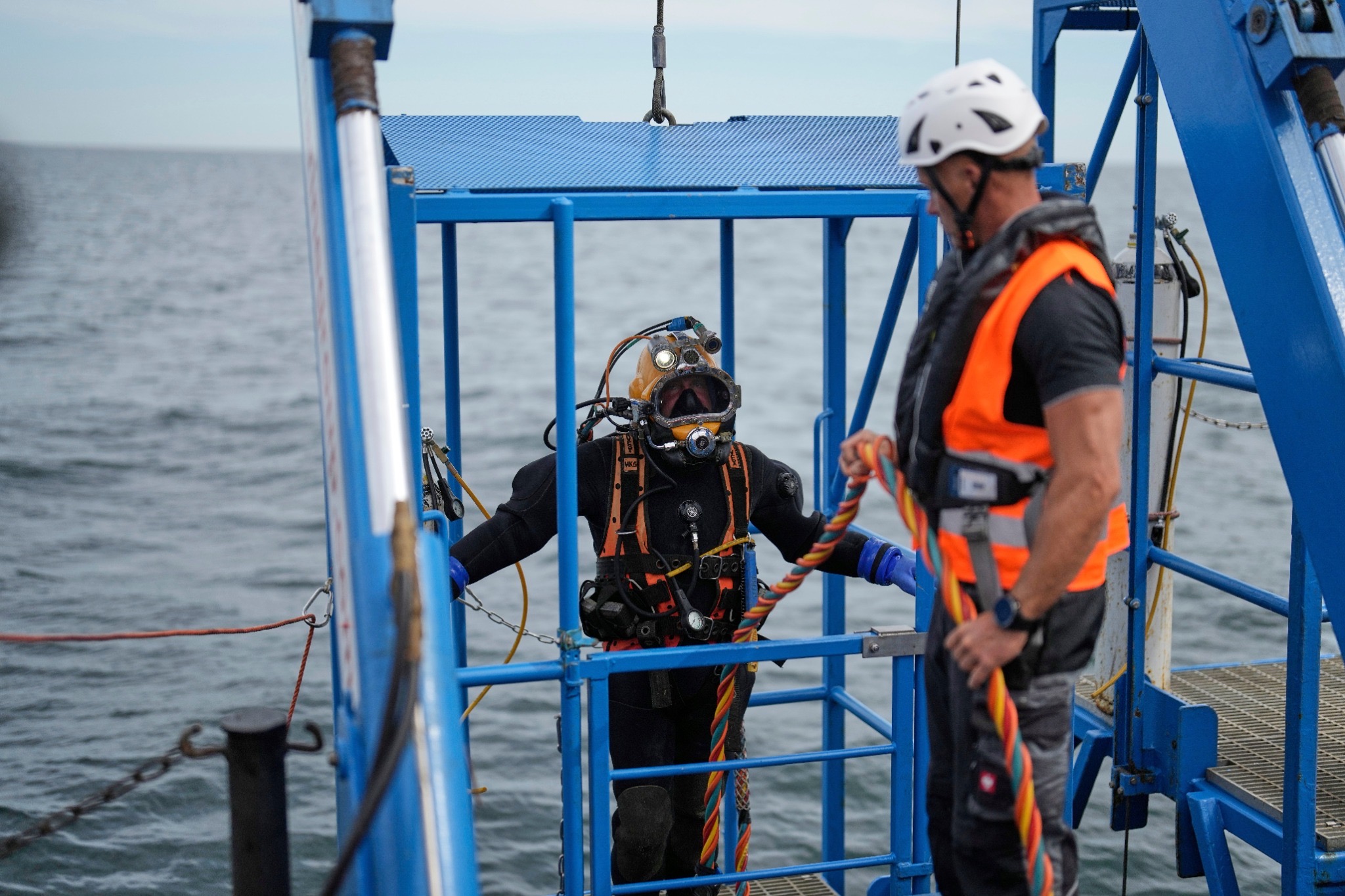
The current recovery effort is led by the Defense POW/MIA Accounting Agency and involves U.S. Navy and Coast Guard divers, forensic archaeologists and other specialists. During a mission lasting more than two months, teams operated from the Navy-owned salvage vessel USNS Salvor and descended nearly 80 feet into the badly damaged wreck. Divers worked in darkness, cutting through steel, removing debris and searching through layers of mud, timber and twisted metal.
The operation is especially challenging because the 436-foot ship has largely collapsed and its contents are heavily scattered. Unlike many previous underwater missions involving a single aircraft or small crew, this wreck may contain the remains and possessions of hundreds of people. Researchers must therefore carefully document every object and possible fragment while avoiding damage to fragile evidence.
Among the most important discoveries was part of a boot with “U.S. Army” marked on its sole. Divers also recovered identification bracelets, footwear with military insignia and material that may be human remains. These personal objects provide powerful evidence that investigators have reached areas where prisoners were confined, while also transforming the historical event into a more immediate and human story.
Possible remains must undergo forensic analysis, but identification may still be difficult. Investigators need usable DNA and genetic samples from living relatives, and in some cases those family references are not yet available. Approximately 80,000 American service members remain missing from past conflicts, most of them from World War II, and fewer than 4,000 have been accounted for since 1973.
The team plans to return to the wreck in fiscal year 2027. Even partial identifications could bring long-awaited answers to families who have spent generations uncertain about how and where their relatives died. The mission is therefore both a complex archaeological operation and a national commitment to honor service members who never returned from war.