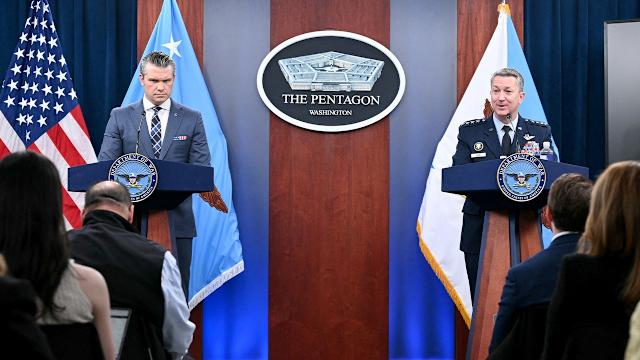

The Pentagon has announced a new set of restrictions on journalists working at the Defense Department, triggering a fresh clash over press freedom and government transparency. The move came just days after a federal judge blocked an earlier Pentagon media policy that critics said unlawfully threatened reporters and gave officials too much power to punish unfavorable coverage. The Defense Department said it revised its policy to comply with the court order, but media organizations argue the new rules still violate both the spirit and the substance of the ruling.
Under the revised policy, all journalists seeking physical access to the Pentagon must now be escorted by authorized Defense Department personnel. The Pentagon is immediately closing the “Correspondents’ Corridor,” the indoor workspace that journalists have used for years inside the building. In its place, the department plans to create a new press workspace outside the main Pentagon building, though that alternative space was not yet ready at the time of the announcement. These changes amount to a major reduction in access for reporters who regularly cover the U.S. military and national security.
The Pentagon said the new restrictions were necessary after the court blocked the prior policy. Pentagon spokesman Sean Parnell said the department would comply with the ruling while also appealing the decision. The earlier rules, introduced in October 2025 under Defense Secretary Pete Hegseth, had allowed the Pentagon to treat journalists as security risks and revoke their press credentials if they sought information not authorized for release. That policy was challenged in court after critics warned it could be used to intimidate reporters and discourage aggressive coverage of the department.
The legal battle was driven in part by a lawsuit filed by The New York Times. The newspaper argued the 2025 policy effectively gave the Pentagon the power to freeze out reporters and media outlets over coverage the department disliked, in violation of constitutional protections for free speech and due process. On March 20, 2026, a federal judge blocked those earlier access rules. But the conflict did not end there. After the Pentagon unveiled the revised policy on March 23, both the Pentagon Press Association and The New York Times said the new restrictions still do not comply with the judge’s order. The Times said it would return to court, while the Pentagon Press Association called the latest changes a clear violation of the ruling’s letter and spirit.
The controversy has become part of a wider debate over press access under President Donald Trump’s administration. Press freedom advocates have criticized recent Pentagon policy changes as suppressing freedom of speech and limiting journalists’ ability to independently report on one of the most powerful institutions in government. Supporters of the restrictions argue that tighter controls are justified by national security concerns, especially when reporters seek sensitive information from military personnel.
In practical terms, the new rules could make day-to-day Pentagon reporting more difficult by limiting spontaneous access, reducing the physical presence of journalists inside the building and increasing the government’s control over how reporters move through the complex. Even though the Pentagon says it merely revised its policy to satisfy the court, the dispute now appears headed back to court, where judges may decide whether the department truly complied or simply replaced one contested press restriction with another.