
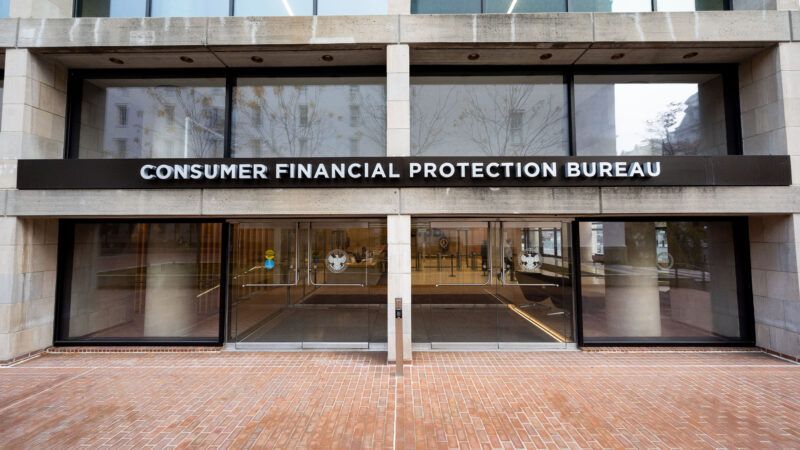

The Trump administration has unveiled a revised plan to dramatically reduce the size of the U.S. Consumer Financial Protection Bureau, stepping back from an earlier effort to nearly wipe out the agency but still seeking to cut about two-thirds of its workforce. The new proposal was disclosed in a court filing to the U.S. Court of Appeals for the District of Columbia Circuit. The Justice Department argued that the revised approach proves the administration is no longer trying to shut the agency down completely, which had been a central concern raised by a lower court.
Under the new plan, the CFPB would be reduced to 556 employees, leaving it with fewer than one-third of the staff it had when Trump took office. The proposed cuts would be especially severe in the agency’s core regulatory divisions. The Division of Supervision, which monitors banks and nonbank financial firms that provide consumer services, would lose 85% of its positions. The enforcement division would lose 80% of its jobs. Those figures suggest that even if the agency formally survives, much of its operational capacity would be stripped away.
The legal fight over the CFPB has become a test of how far an administration can go in shrinking an agency created by Congress. The Justice Department is asking for the lower court to reconsider a stay that currently blocks the government from carrying out its downsizing plan. The filing would also pause a pending appeal before the full D.C. Circuit, where judges had appeared skeptical of the administration’s earlier claim that courts lacked the power to stop mass firings that could effectively destroy the agency.
Until now, the administration had been pushing for permission to eliminate nearly all CFPB positions. That earlier plan drew strong objections from lawyers representing an employee union and others who argued that such a move would be unlawful because it would prevent the bureau from carrying out duties that Congress explicitly assigned to it when it created the agency in 2010. The revised proposal appears to be an attempt to answer that legal criticism by preserving a smaller version of the CFPB rather than abolishing it outright.
Still, the political conflict around the bureau remains intense. Trump and other senior officials have repeatedly called for the CFPB to be eliminated, accusing it of politicized enforcement and of placing unfair burdens on businesses. Consumer advocates reject that view and say the attack on the bureau amounts to an illegal gift to politically connected corporate interests at the expense of the public. In their view, stripping the agency of most of its staff would sharply weaken protections for borrowers, bank customers, and other consumers even if the bureau continues to exist on paper.
The stakes are high because the CFPB was designed after the 2008 financial crisis to serve as a dedicated federal watchdog for consumers using mortgages, credit cards, loans, and other financial products. The administration is now trying to reshape the agency through workforce cuts rather than direct abolition, likely because the courts have signaled that eliminating it entirely may not withstand legal scrutiny. That makes the new plan less extreme than the old one, but still potentially transformative.
In practical terms, the revised strategy appears to preserve the CFPB’s existence while hollowing out much of its power. The agency may remain open, but with supervision and enforcement staff cut so deeply, its ability to investigate misconduct, oversee financial firms, and protect consumers could be fundamentally reduced. Whether courts accept that distinction may determine not only the future of the CFPB, but also how aggressively future administrations can weaken agencies they cannot legally abolish.