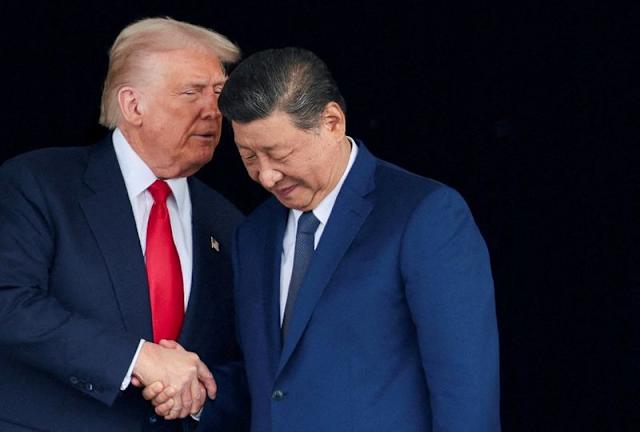

The U.S. government plans to ask the public which Chinese goods should qualify for lower tariffs, signaling a cautious new phase in Washington’s trade relationship with Beijing. U.S. Trade Representative Jamieson Greer said the administration will seek public comment on products that could be eligible for tariff reductions. The move follows recent Trump-Xi talks and the creation of a joint U.S.-China Board of Trade designed to review about $30 billion in non-strategic goods that may receive reduced or eliminated tariffs.
The plan does not represent a full reset of U.S.-China trade relations. Greer made clear that the Trump administration is not abandoning tariffs as a tool of economic pressure. Instead, the approach appears to be more selective: keep higher tariffs on goods considered strategic or sensitive, while identifying lower-risk products where tariff relief could help businesses, consumers, or supply chains. Greer described the new direction as a form of “managed trade,” suggesting Washington wants trade with China to continue but under tighter political control.
The public comment process is important because it gives companies, trade groups, importers, manufacturers, and consumers a chance to argue which products should be spared from high duties. Businesses that depend on Chinese inputs may push for relief on parts, materials, or consumer goods that are difficult to source elsewhere. At the same time, industries competing with Chinese imports may argue that tariff cuts would hurt U.S. producers. The result could become a major lobbying fight over which goods are considered “non-strategic” and which remain protected.
The announcement comes after a broader set of preliminary trade understandings between Washington and Beijing. China recently said it would buy 200 Boeing aircraft and seek an extension of the U.S.-China tariff truce, while both sides agreed to explore reciprocal tariff cuts on roughly $30 billion of goods each. The talks also included discussions about agricultural market access, rare earths, export controls, and non-tariff barriers.
Agriculture is another key part of the deal. The White House said China committed to buying at least $17 billion in U.S. agricultural products annually for 2026, 2027, and 2028. That matters because U.S. farm exports to China fell sharply during earlier tariff disputes, hurting American farmers and making agriculture one of the most politically sensitive parts of the trade. Greer tried to lower expectations after the summit. He said Trump’s meeting with Xi did not produce the kind of major Chinese concessions some observers had hoped for. The U.S. appears to accept that China is unlikely to make major political or economic reforms, but it still wants practical trade arrangements in areas where both countries benefit.
Overall, the public comment process shows that U.S.-China trade policy is shifting from broad confrontation toward a more targeted negotiation. Tariffs will likely remain higher on Chinese goods than on imports from many other countries, but Washington is now looking for areas where limited relief could reduce costs without weakening national security or industrial policy goals. The result is not free trade, but a controlled bargain: the U.S. keeps pressure on China while opening the door to selective tariff cuts where economic needs outweigh strategic concerns.