
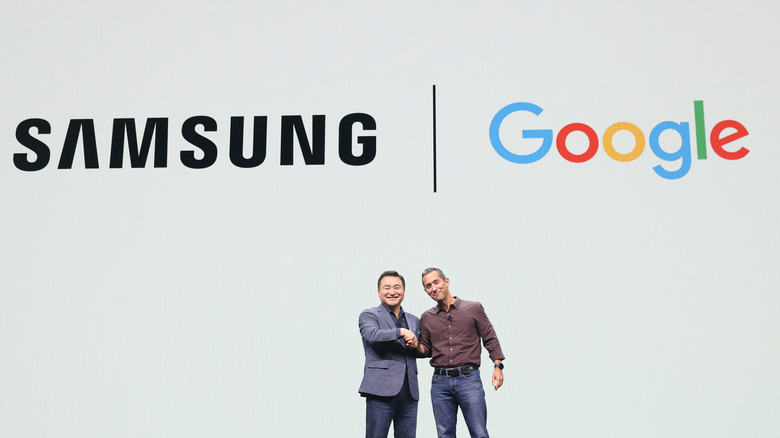

Google is in talks with Samsung Electronics to manufacture part of its next-generation artificial intelligence chip, a move that suggests the company is trying to diversify its chip supply chain as global demand for advanced AI hardware keeps rising. Google wants TSMC to build the main computing section of its next tensor processing unit, code-named “Icefish,” while Samsung could make a separate component that links the chip to memory using Samsung’s 2-nanometer manufacturing technology.
The reported arrangement is important because it would split production between two major manufacturers instead of relying entirely on one. TSMC remains the dominant global contract chipmaker and is already central to the AI boom, but Google’s talks with Samsung are the latest sign that the company wants to reduce dependence on TSMC, which has been under pressure to keep up with surging AI demand and could become a bottleneck for the industry. That makes the Samsung discussion about more than one product. It reflects a wider concern among technology companies about securing enough advanced manufacturing capacity.
Icefish is still under development. Google is working with MediaTek on the chip’s design and that mass production may begin as early as 2028. That timeline suggests Google is planning well ahead for the next wave of AI computing needs rather than simply reacting to current shortages. The chip’s architecture, with one company potentially producing the main logic component and another building the memory-connectivity piece, also shows how complex advanced AI chip manufacturing has become.
For Samsung, landing this work would be a meaningful win. The company is pushing to grow its contract chip-manufacturing business and sees advanced nodes such as 2-nanometer production as a way to attract more high-profile clients. The 2nm process is significant because smaller manufacturing nodes can deliver more computing power in less space while improving energy efficiency, something especially valuable for AI systems that consume enormous amounts of electricity. Samsung said in April it expected to win more customers for this advanced process and was even considering a second Texas plant to expand production.
The report fits into a broader pattern in Google’s AI strategy. Google’s in-house AI chips have emerged as an alternative to Nvidia’s dominant graphics processors, and that rising sales of those TPUs have become a growth driver for Google Cloud. In April, Google unveiled two new custom chips designed for both training large AI models and running inference, the stage where models generate answers and predictions for users. That means Google is not just buying AI infrastructure from others; it is increasingly trying to control its own silicon roadmap as part of its cloud and AI business.
Another recent Information story said Google had been in talks with Intel to manufacture more than three million TPUs in 2028. Taken together, those reports suggest Google may be spreading production across multiple partners to reduce supply risk, increase flexibility and avoid being trapped by one manufacturer’s capacity limits.
Neither company publicly confirmed the discussions. Apparently, Samsung declined to comment and Alphabet did not immediately respond.
Overall, the reported talks show how the AI chip race is becoming more distributed and more strategic. Google appears to be building a broader manufacturing network for future TPUs, while Samsung is trying to prove it can win a bigger role in cutting-edge AI hardware. If the deal happens, it would mark both a supply-chain shift for Google and a credibility boost for Samsung’s foundry ambitions.