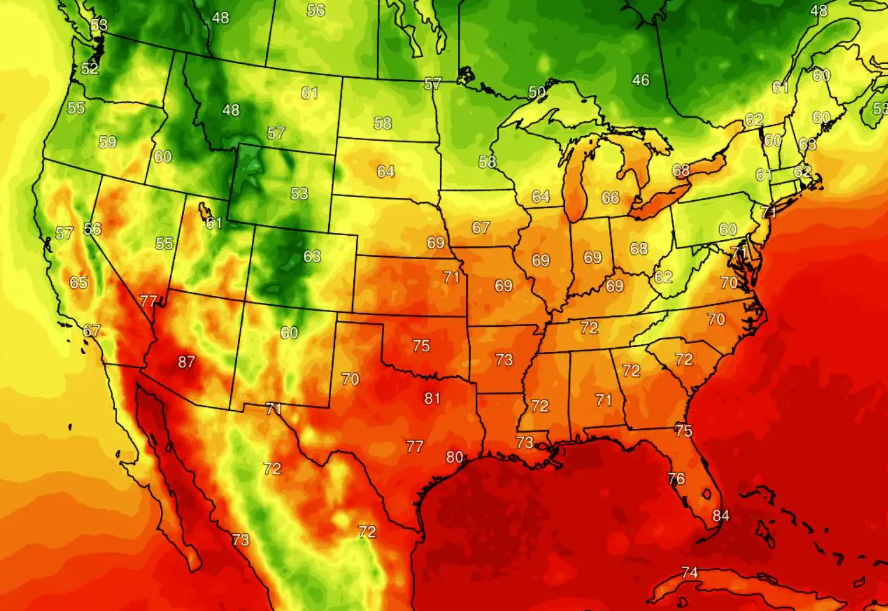

Most of the continental United States is preparing for an unusually large, intense and long-lasting heat dome that could expose millions of people to dangerous temperatures for at least a week. The system will begin settling over the Northern Plains before expanding across as much as two-thirds of the Lower 48 states. Some areas may continue experiencing extreme heat through the end of July. The National Weather Service has described the expected conditions as “significant and dangerous.”
Temperatures in many regions are forecast to rise 15 to 25 degrees Fahrenheit above seasonal averages, with record triple-digit highs possible in Nevada, Utah, Colorado, Wyoming, Idaho, Montana and the Dakotas. The heat dome may eventually stretch nearly from coast to coast as it shifts and wobbles over the country. Meteorologists say the event stands out because of its combination of geographic size, atmospheric strength and duration, rather than because of one isolated record.
A heat dome develops when a powerful area of high pressure traps hot air near the ground, acting like a lid over a pot. The system blocks cooling winds, cloud formation and rainfall, allowing heat to build day after day. In this case, drought conditions could make the event even worse because dry soil provides less moisture to slow atmospheric warming. The resulting hotter and drier air can then intensify drought and increase wildfire danger, creating a destructive feedback cycle.
Nighttime heat is one of the most serious health concerns. Forecasters expect more than 90 local temperature records to be tied or broken , with roughly two-thirds involving unusually warm nights. In several cities from Texas to Florida and the Carolinas, temperatures may remain above 80 degrees Fahrenheit overnight. When temperatures do not fall after sunset, the body receives little opportunity to recover from daytime stress, increasing the danger of dehydration, heat exhaustion, cardiovascular problems and heatstroke.
The Southeast may experience an unusual combination of conditions. Rain and additional moisture along the southern edge of the heat dome could keep some daytime temperatures below average, but the humidity may cause record-breaking overnight warmth. This shows why temperature alone does not fully measure heat danger: high humidity prevents sweat from evaporating efficiently, making conditions feel hotter and placing more strain on the body.
Scientists say human-caused climate change is clearly increasing the severity of the event. Climate experts emphasized that heat waves are becoming hotter, broader and longer-lasting as greenhouse gases from coal, oil and natural gas warm the planet. A Climate Central analysis found that a 20,000-square-mile corridor from Southern California to northern Minnesota, home to about 24 million people, could experience temperatures at least five times more likely because of climate change.
Although a new El Niño has recently formed, meteorologists said it is still too young to have a major influence on this particular heat wave. The dominant factors are the unusually strong high-pressure system, widespread drought and the warmer climate in which the event is developing.
This is not an ordinary period of summer heat. Its enormous reach, extreme nighttime temperatures and possible persistence through late July make it a serious public-health and wildfire threat. Meteorologists stress that extreme heat can kill as quietly and effectively as more dramatic disasters such as hurricanes or tornadoes, making preparation and access to cooling especially important.