
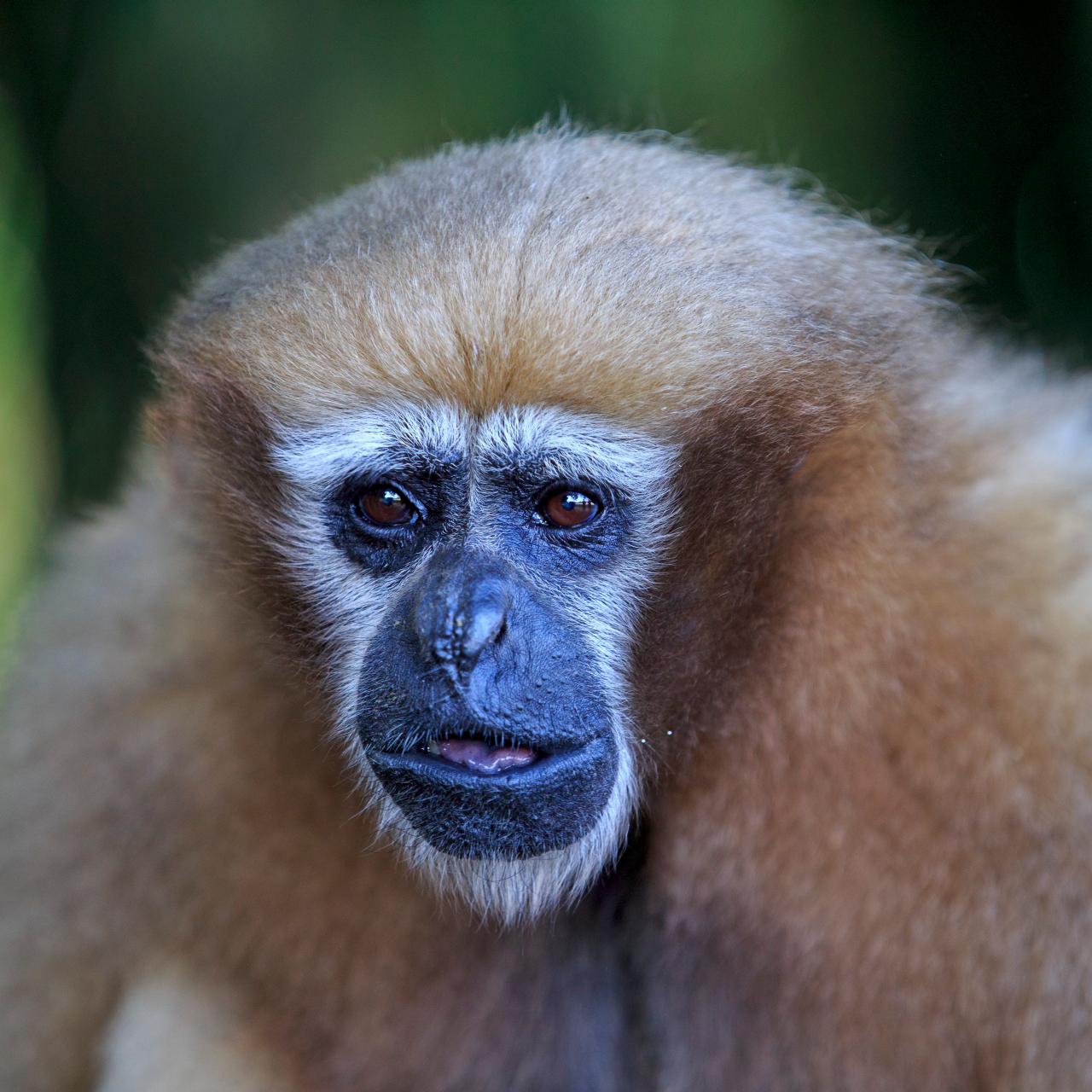

Hidden in the dry hills of California’s Santa Clarita Valley, north of Los Angeles, an unusual conservation center has spent half a century protecting some of the world’s rarest primates. The Gibbon Conservation Center, founded in 1976, has evolved from a small collection of animals into an internationally recognized institution devoted exclusively to gibbon conservation, scientific research, breeding and education. Today, it cares for approximately 40 gibbons representing five species.
The center’s story began with Alan Mootnick, a California house painter and remodeling contractor who had no traditional academic background in primatology. Mootnick became fascinated with gibbons and largely taught himself about their behavior, biology and classification. In 1976, he acquired his first gibbon, Spanky, after responding to a newspaper advertisement offering the animal as a pet. That encounter ultimately shaped the rest of his life.
Over the following decades, Mootnick became a respected authority on gibbons. He published scientific papers, welcomed researchers from around the world and advised specialists who needed assistance identifying species or understanding gibbon behavior. Scientists sometimes sent him photographs or recordings of vocalizations so he could help determine which species they were studying.
After Mootnick died unexpectedly in 2011 following complications from heart surgery, Gabi Skollar, who had moved from Hungary to California in 2005 to study under him, assumed responsibility for continuing his mission. She now lives at the sanctuary and serves as its director while conducting doctoral research at UCLA focused on gibbon vocalizations.
Those vocalizations are among the animals’ most extraordinary characteristics. Gibbons can sing several times each day, producing complex combinations of calls, hoots and other sounds that can travel considerable distances. Researchers study these vocal patterns to better understand communication, social relationships and species differences. Information collected in captivity can then be shared with conservationists and rescue organizations working with wild populations.
That work has become increasingly important because gibbons face serious threats in their native Southeast Asian rainforests. Habitat destruction continues reducing their natural territory, while illegal wildlife trafficking removes young gibbons from the wild for sale as pets. Some species represented at the California center have fewer than 2,000 individuals remaining in the wild.
The center has also played an important role in breeding programs. It became the first institution to successfully breed Javan gibbons, an endangered species native exclusively to the Indonesian island of Java. Animals are sometimes exchanged with other accredited institutions to preserve genetic diversity. The center is also preparing to send a pair of northern white-cheeked gibbons to the Pittsburgh Zoo.
Daily care is intensive. Gibbons are fed five or six times per day to approximate their natural foraging patterns. Their diet includes produce such as lettuce, sweet potatoes and bananas. Caretakers also develop strong individual relationships with the animals, learning their personalities, preferences and social behaviors.
Beyond animal care, education has become another central part of the center’s mission. Weekend guided tours introduce families and tourists to gibbons, while partnerships with schools and colleges give students practical experience in animal care and conservation. Some students who first encountered the sanctuary during educational visits have eventually returned to work with gibbons professionally.
Skollar now hopes to expand Mootnick’s legacy by raising funds for larger enclosures and a dedicated visitor education center. The goal is not simply to protect the animals living in California, but to use the sanctuary’s research and educational work to support conservation efforts worldwide.
What began with one self-taught house painter and a gibbon purchased from a newspaper advertisement has therefore become something far more consequential. Fifty years later, the Gibbon Conservation Center demonstrates how one person’s unusual passion can develop into a scientific institution helping protect an entire group of endangered primates from disappearing.