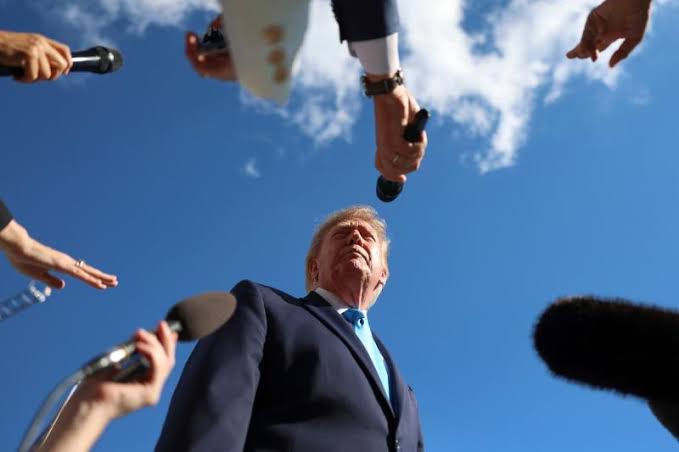

President Donald Trump is promoting what he calls a new golden age of American scientific innovation, unveiling major artificial intelligence initiatives and celebrating technology industry leaders even as researchers warn that federal funding reductions, immigration restrictions, and institutional changes could weaken the nation’s long-standing leadership in scientific discovery.
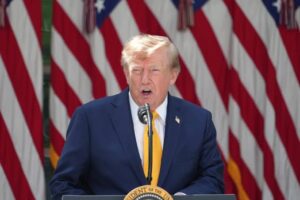
Speaking at a White House science summit on October 8, Trump presented an ambitious vision centered on artificial intelligence, private-sector investment, and technological competition with China.
The administration announced several initiatives intended to accelerate scientific research and expand access to advanced computing resources.
Among the most significant developments was a commitment from technology companies, including AMD, OpenAI, and Anthropic, to provide more than $1 billion in computing credits for a federal AI research initiative.
Officials also announced a Southeast Regional AI Computing Consortium spanning 10 states, alongside a $1 billion investment in advanced chips and computing resources for students and researchers in Georgia.
These programs reflect the administration’s determination to position artificial intelligence at the center of America’s scientific and economic future.
However, the announcements come amid growing criticism of the administration’s approach to traditional research institutions.
Scientists, university leaders, and lawmakers from both parties have expressed concerns that federal funding reductions and staffing changes could undermine the scientific infrastructure responsible for decades of American breakthroughs.
The National Science Foundation has withheld more than $1 billion in congressionally allocated research funding during the past year.
The administration maintains that these resources remain available for initiatives aligned with priorities such as artificial intelligence, quantum computing, and semiconductor development.
White House officials defend the changes as necessary to eliminate waste, strengthen accountability, and direct taxpayer resources toward research with measurable benefits.
Critics argue that concentrating resources in selected technological fields could weaken basic scientific research, which frequently produces important discoveries without immediate commercial applications.
Historically, federally supported research has contributed to technologies including GPS, personal computers, and modern vaccines.
Another major concern involves America’s ability to attract international scientific talent.
Immigration restrictions and uncertainty surrounding research opportunities have discouraged some foreign scientists from pursuing careers in the United States.
China, meanwhile, continues expanding investments in research and development while actively recruiting scientists.
The administration argues that the United States has become overly dependent on international researchers and should develop more domestic talent.
To address that challenge, officials announced a $100 million initiative supporting exceptional American students pursuing accelerated doctoral degrees combining artificial intelligence with other scientific or engineering disciplines.
The National Science Foundation is also introducing educational pathways that could allow students to complete bachelor’s and doctoral degrees within six years.
The administration’s broader strategy represents a significant departure from the traditional American research model.
For decades, federal agencies have distributed substantial funding through universities, supporting independent scientific investigation across numerous disciplines.
Trump’s science adviser, Michael Kratsios, argues that this structure has become increasingly bureaucratic and insufficiently responsive to emerging technologies.
His proposed reforms would direct more resources toward individual scientists, independent research organizations, and private-sector partnerships.
The administration also highlighted prominent technology executives, awarding national science and technology medals to leaders including Elon Musk, Jensen Huang, Lisa Su, Sergey Brin, Satya Nadella, and Michael Dell.
Supporters see the initiatives as an opportunity to modernize research institutions and accelerate innovation.
Critics, including former federal science officials, warn that weakening universities and limiting international collaboration could undermine the foundations of American scientific leadership.
The debate comes as China’s growing capabilities in biotechnology, artificial intelligence, and advanced manufacturing intensify competition between the world’s two largest economies.
Ultimately, the central question is whether America’s next generation of breakthroughs will emerge from a research system increasingly focused on private industry and strategic technologies—or whether reducing support for traditional scientific institutions will weaken the broader foundation that made those breakthroughs possible.
The outcome could shape America’s technological competitiveness, economic growth, and scientific leadership for decades.