
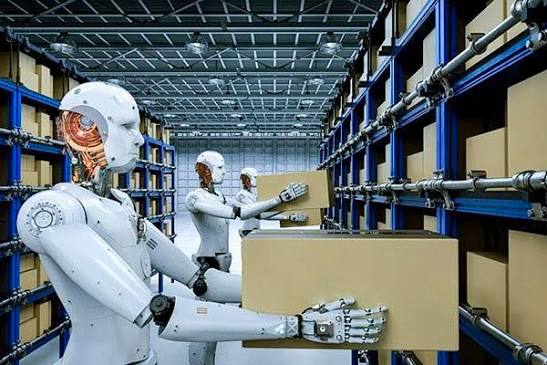

Artificial intelligence is no longer just a technology story. It is becoming a major political and economic fight over jobs, wages, worker power and who benefits from automation. As companies move faster to adopt AI, lawmakers are trying to understand whether the technology will create new opportunities, eliminate millions of jobs, or do both at the same time. The debate is becoming more urgent because AI is already entering offices, call centers, customer service departments, software teams, journalism, finance, law and health care.
The core concern is that AI could hit workers before the government has a clear plan to protect them. Previous technologies also changed the economy, but generative AI is different because it can perform cognitive tasks that once seemed safely human: writing, coding, summarizing, analyzing documents, answering customers and producing creative material. A Washington Post analysis earlier this year compared AI systems with humans on real work assignments and showed how quickly tools like ChatGPT are moving toward tasks once performed by paid workers.
Additionally, some political leaders and economists are proposing ways to soften the shock if AI displaces large numbers of workers. Ideas include stronger unemployment support, wage insurance, job retraining, taxes on automation, a shorter workweek, portable benefits and even universal basic income. Figures from Elon Musk to Elizabeth Warren and policy experts are offering competing answers to the same question: what happens if AI reduces the need for human labor faster than the economy can create new roles?
Recent labor data is adding fuel to the debate. Challenger, Gray & Christmas reported that AI became the most commonly cited reason for layoffs among U.S. employers, with AI blamed for 40% of May 2026 job cuts and nearly 88,000 cuts so far this year. The firm cautioned that this is not yet a full “jobpocalypse,” but the numbers show that companies are increasingly using AI to justify restructuring and workforce reductions.
Still, the future is not simple. Some economists argue AI may replace tasks rather than entire jobs, making workers more productive instead of unnecessary. Others say the biggest risk will fall on routine clerical, administrative and entry-level roles, which have traditionally helped people enter the middle class. A recent survey of chief financial officers found that AI is expected to affect routine office jobs more than highly skilled roles, while workers who can use AI effectively may become more valuable.
The political challenge is that the benefits and harms may be uneven. Large technology companies, investors and highly skilled workers could gain, while young workers, less-educated employees and people in repetitive white-collar jobs may face instability. That could deepen inequality and create anger similar to earlier waves of globalization and automation.
AI’s labor impact is becoming a central public-policy issue. The question is not only whether AI will destroy jobs, but whether government, companies and workers can adapt quickly enough. Without serious planning, the technology could widen inequality and weaken trust in the economy. With better policy, AI could become a tool that raises productivity while still protecting people from being left behind.