
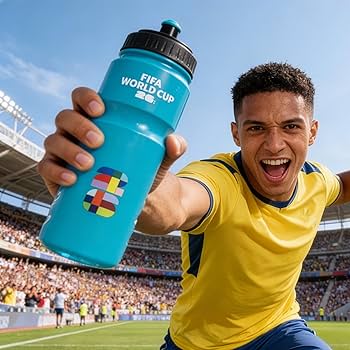

The 2026 World Cup will introduce mandatory hydration breaks in every match, and what began as a player-safety measure could become a major advertising opportunity for broadcasters. FIFA has required three-minute hydration breaks in each half of all 104 matches at the tournament, which will be played across the United States, Mexico and Canada. The rule is meant to protect players from intense summer heat, but it also creates rare pauses in a sport traditionally known for continuous play.
Those pauses could be extremely valuable, especially in the United States, where sports broadcasting is built around commercial breaks. Soccer normally offers advertisers fewer natural opportunities because each half runs for 45 minutes without interruption. Hydration breaks change that structure. Broadcasters may be able to sell premium ad slots during moments when audiences are still watching and the match has not ended. Analysts believe some of these ad slots could command prices approaching Super Bowl-level rates, possibly as high as $9 million, depending on the match and audience size.
The commercial appeal is obvious. The World Cup is one of the most-watched events on Earth; with the 2022 final drew about 1.42 billion viewers globally. For advertisers, a guaranteed pause during live World Cup action could be one of the most attractive media opportunities in sports. Brands that normally struggle to reach huge live audiences may see these water breaks as a powerful chance to advertise during a global event with unmatched cultural attention.
The change also reflects the Americanization of the 2026 tournament. Because the United States is one of the main host countries, FIFA and broadcasters are adapting some parts of the event to a market familiar with commercial-heavy sports like the NFL and NBA. The tournament will also include Super Bowl-style entertainment elements, including a halftime show featuring Shakira, further signaling that the World Cup is being shaped partly for U.S. television and advertising culture.
But the idea may be controversial, especially among traditional soccer audiences. In places like the United Kingdom and much of Europe, fans are used to uninterrupted halves and may resist extra advertising. ITV does not plan to show commercials during hydration breaks, reflecting both regulatory limits and audience expectations. That contrast shows how differently broadcasters may treat the same FIFA rule depending on local markets.
Critics worry that commercializing hydration breaks could weaken soccer’s rhythm and turn player-safety pauses into profit centers. Supporters argue that the breaks are necessary because of heat concerns and that broadcasters will naturally use available time to generate revenue. The challenge for FIFA will be keeping the breaks focused on player welfare while avoiding the perception that the tournament is being redesigned mainly for advertisers.
Climate, television money and global sports culture are converging at the 2026 World Cup. Heat has forced FIFA to add hydration breaks, but broadcasters may turn those breaks into some of the most valuable advertising inventory in sports. The result could protect players, increase revenue and reshape how fans experience the world’s biggest soccer tournament.