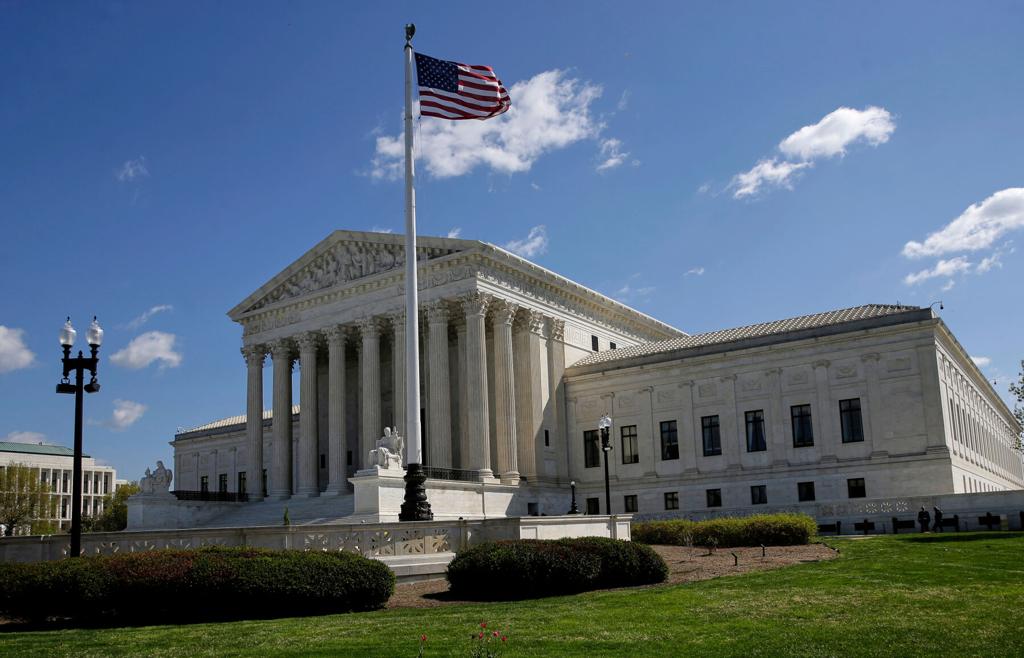

The U.S. Supreme Court has delivered a major blow to the Voting Rights Act by striking down Louisiana’s second majority-Black congressional district, a ruling that could reshape redistricting battles across the country and strengthen Republican efforts to hold or expand control of the House. In a 6-3 decision, the court’s conservative majority said the Louisiana map relied too heavily on race and therefore violated constitutional limits, with Justice Samuel Alito writing that the district was an “unconstitutional gerrymander.”
The case centered on Louisiana’s 6th Congressional District, a long and irregularly shaped seat that linked Black communities across a broad stretch of the state. Chief Justice John Roberts had previously described the district as a “snake” stretching more than 200 miles from Shreveport through Alexandria and Lafayette to Baton Rouge. The district had been created after an earlier Supreme Court ruling in a similar Alabama case pushed Louisiana lawmakers to add a second Black-majority district, reflecting the fact that about one-third of the state’s population is Black.
The practical importance of the case goes far beyond Louisiana.The ruling could open the door for Republican-led states to eliminate Black and Latino electoral districts that have often helped Democrats win seats. It also said the broader political effect may be felt most strongly in 2028, since most filing deadlines for the 2026 election cycle have already passed. Louisiana itself, however, may now have to redraw its map sooner to comply with the ruling.
What makes the decision especially consequential is its effect on Section 2 of the Voting Rights Act of 1965, the main legal tool used to challenge racially discriminatory voting maps and practices. It is now unclear how much of Section 2 remains effective after the ruling. In dissent, Justice Elena Kagan said the court’s “gutting of Section 2 puts that achievement in peril,” referring to the Civil Rights-era law that President Lyndon Johnson had once called “a triumph for freedom as huge as any victory on any battlefield.” Former President Barack Obama also condemned the ruling, saying it showed a majority of the current court seemed intent on abandoning its role in ensuring equal participation in democracy.
The ruling also appears to mark a significant reversal by the justices. Less than three years ago, Roberts and Justice Brett Kavanaugh joined the three liberal justices in the Alabama case that helped produce new Black-majority districts in both Alabama and Louisiana. This time, both Roberts and Kavanaugh joined Alito’s opinion. That reversal suggests the court has moved even further toward limiting how race can be considered in electoral maps, even when the goal is to protect minority voting power.
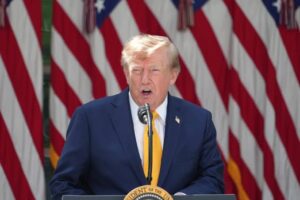
The political fallout could be substantial. Election law expert Nicholas Stephanopoulos estimated that nearly 70 of the 435 congressional districts are protected by Section 2. Also, Trump had already triggered a nationwide redistricting competition this year to improve Republican odds of preserving their narrow House edge, and the president praised the decision as the “kind of ruling I like.” In Florida, lawmakers were already debating a new map from Gov. Ron DeSantis intended to help Republicans pick up as many as four additional seats, and they moved ahead with it the same day the ruling came down.
Overall, the decision is not just a Louisiana story. It is a major national turning point in voting-rights law, one that could make it much harder for minority communities to challenge maps that dilute their influence. For supporters, the ruling limits racial line-drawing by the government. For critics, it weakens one of the country’s most important protections against vote dilution and could reshape congressional power for years to come.