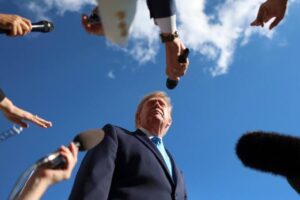
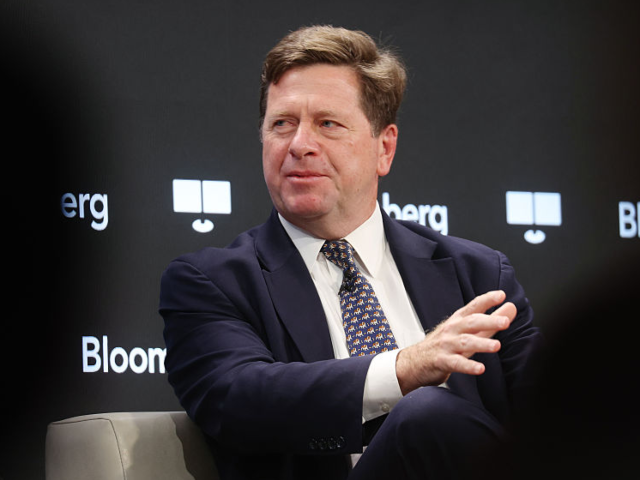

President Donald Trump has nominated Jay Clayton, the top federal prosecutor in Manhattan and former Securities and Exchange Commission chair, to become the next director of national intelligence, putting a politically moderate but intelligence-inexperienced lawyer at the top of the U.S. spy apparatus during a heated battle over surveillance powers and national security leadership. Trump announced the nomination on June 11 and urged the Senate to confirm Clayton quickly as the permanent successor to Tulsi Gabbard, who is leaving the role overseeing the nation’s 18 intelligence agencies.
The nomination comes in the middle of a larger political crisis over Trump’s decision to install Bill Pulte as acting intelligence chief. Clayton’s selection did not immediately resolve the standoff because Senate Democrats are still refusing to provide the votes needed to renew Section 702 of the Foreign Intelligence Surveillance Act, a major foreign surveillance authority that was due to expire on Friday, unless Trump withdraws Pulte from the interim post. Senate Democratic leader Chuck Schumer said bluntly that “Pulte has to go,” arguing that national security is too important for an acting director with no intelligence background.
Trump has tried to reassure lawmakers that Pulte will only remain temporarily. Trump told reporters Pulte was there only “for a little while” until Clayton could take over. The White House has formally sent Clayton’s nomination to the Senate, and the Senate Intelligence Committee has already scheduled his confirmation hearing for the following Wednesday. That quick timeline shows the administration wants to stabilize the intelligence leadership situation fast, especially because the Section 702 fight has become tied directly to who is running the Office of the Director of National Intelligence.
Clayton is a notable but unconventional choice. He is a former Sullivan & Cromwell lawyer who specialized in mergers and capital raising, later serving as SEC chair during Trump’s first term, where he built a reputation as a consensus-seeking political moderate. In April 2025, Trump nominated him as interim U.S. attorney for the Southern District of New York, one of the most powerful prosecutorial posts in the country. But Clayton has no intelligence background and lacks extensive national security experience, even though the law creating the DNI post after the September 11 attacks envisioned someone with deep expertise in those areas.
CIA Director John Ratcliffe recommended Clayton to Trump after the president asked who should permanently replace Gabbard. That detail matters because it suggests the nomination was driven partly by trust inside Trump’s national security circle, rather than by a traditional intelligence résumé. Clayton will remain Manhattan U.S. attorney until confirmed, according to the Justice Department.
The deeper issue is that Clayton’s nomination does not eliminate congressional anxiety about politicization. Democrats and some Republicans fear Pulte could use sensitive intelligence authorities to target Trump’s perceived enemies or revisit Trump’s false claims about election fraud. Those concerns are one reason lawmakers from both parties have linked the DNI issue to the Section 702 renewal fight.
But Clayton’s nomination is an effort by Trump to replace a controversial interim arrangement with a more confirmable figure. But while Clayton may be viewed as more capable and more measured than Pulte, his lack of intelligence experience and the continuing surveillance standoff mean the nomination is unlikely to calm Washington immediately. Instead, it opens a new test of whether the Senate will accept Trump’s choice for one of the country’s most sensitive national security posts.