
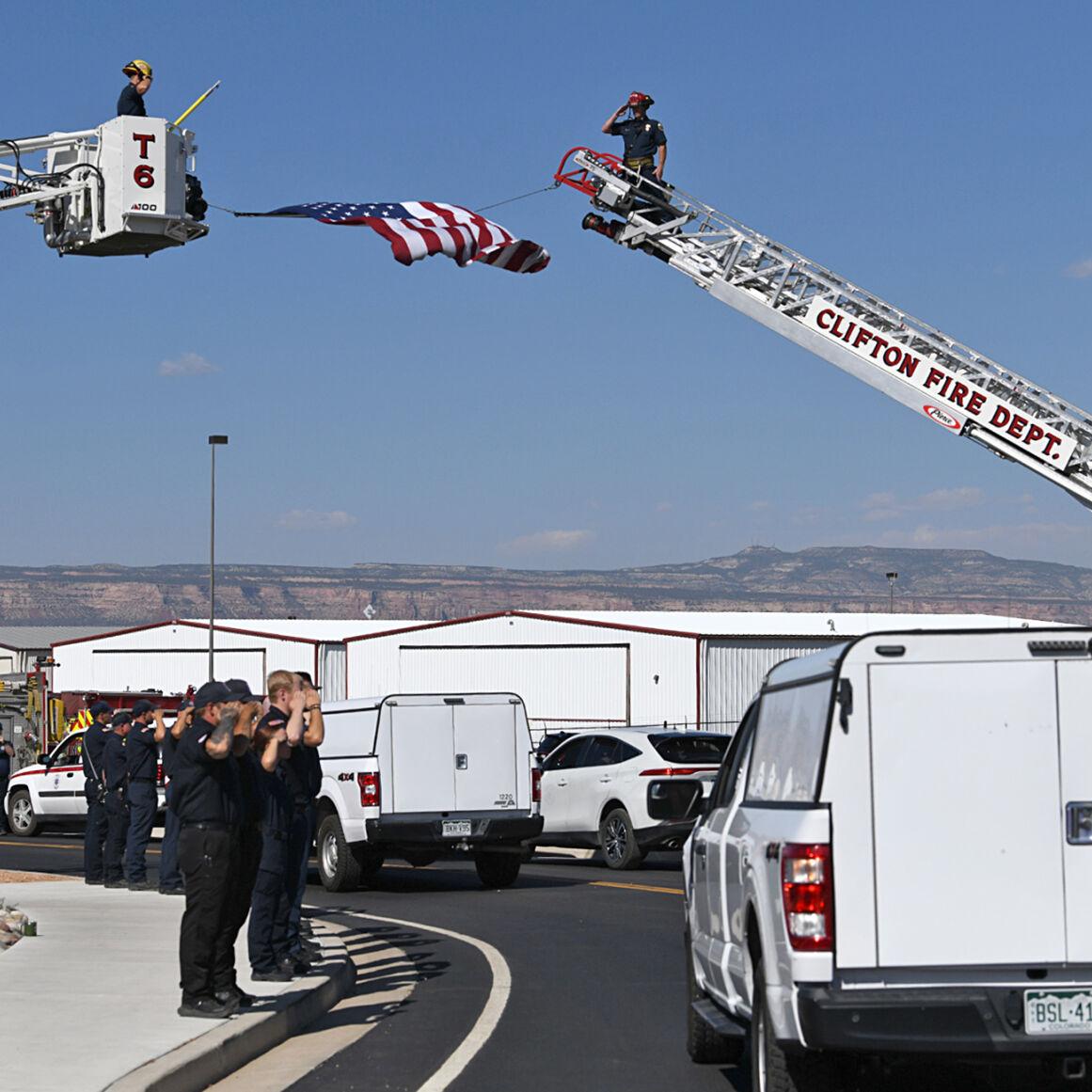

A wildfire along the Colorado-Utah border that killed three firefighters has become one of the deadliest U.S. fire incidents since the Yarnell Hill Fire in Arizona in 2013, drawing painful comparisons to one of the most devastating tragedies in modern wildland firefighting. Three firefighters died west of Grand Junction, Colorado, where the blaze also injured two others. The fire had burned about 44 square miles (114 square kilometers).
What makes the tragedy especially haunting is the similarity to Yarnell Hill. In both cases, firefighters tried to escape worsening fire conditions and ultimately deployed fire shelters as a last resort. 2013 Yarnell Hill Fire killed 19 firefighters and remains the deadliest event for U.S. wildland firefighters in more than a century, as well as the deadliest incident for U.S. firefighters since the Sept. 11, 2001 attacks. At Yarnell, shifting winds trapped the crew in a brush-filled canyon, and temperatures reached about 2,000 degrees Fahrenheit (1,100 Celsius).
In the Colorado blaze, the five firefighters were part of a Helitack crew, specialists who are flown by helicopter into remote areas to cut vegetation and create fire-resistant barriers ahead of advancing flames. The three who died made the same last-resort choice seen at Yarnell: they stopped fleeing and deployed their shelters in an attempt to survive. Two others were injured.
That uncertainty is part of what makes these incidents so difficult to study and prevent. In the Yarnell Hill investigation, officials could not verify radio communications from the crew during a critical half-hour period, leaving unanswered questions about how they assessed the changing fire and why they moved where they did. Even so, the final Yarnell report did not fault the firefighters, concluding they were qualified, trained, and acting within accepted standards and that their commanders made reasonable decisions in a rapidly worsening situation. Sometimes, complexity can outpace organizational attempts to respond.
The current fire tragedy again underscores the limits of fire shelters themselves. Riva Duncan, president of the advocacy group Grassroots Wildland Firefighters, said that shelters are a “last-ditch effort” and are not designed to withstand direct flame. Their ability to save lives depends heavily on where they are deployed and what the fire is doing at that moment. But in 2015 Washington wildfire, in which two firefighters survived after using shelters while three others in a truck died, showing that survival can hinge on circumstance as much as equipment.
The broader significance is that this Colorado-Utah disaster is not just a local tragedy; it is another reminder of how quickly wildfire conditions can overwhelm even experienced crews. Wildland firefighters routinely work in terrain where wind shifts, heat, vegetation, and visibility can transform a manageable operation into a fatal one within minutes. The new deaths echo a hard lesson from Yarnell: in extreme fire behavior, training and preparation are essential, but sometimes they are still not enough to fully control the danger.