
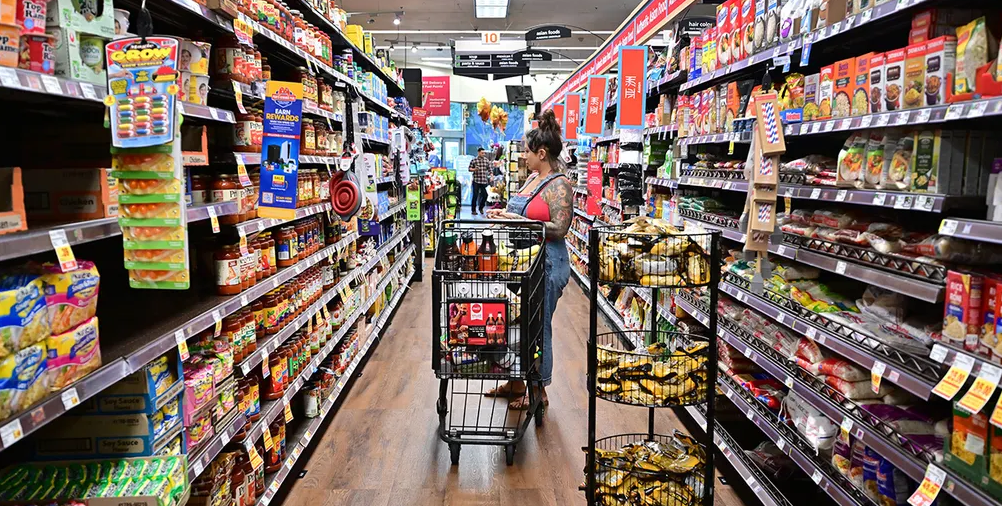

Food insecurity is rising sharply among many Americans, especially lower-income households, families with young children, and people with less education, according to new research from the Federal Reserve Bank of New York. Fed economists described the increase as “remarkable,” warning that food-related hardship may help explain why consumer sentiment remains weak even though broader economic data still shows the U.S. economy performing relatively well.
The New York Fed surveyed households about several signs of financial stress: whether they had used savings to cover basic expenses, had trouble getting enough food, skipped meals, or received public or private food assistance. Between October 2025 and February 2026, the share of households reporting these problems increased meaningfully. The rise was broad, but it was especially severe among nonwhite households, lower-income Americans, less-educated households, and families with children.
The findings reveal a painful split in the economy. On paper, the U.S. still appears resilient, with stable employment and continued spending in some sectors. But for vulnerable households, the pressure of high food prices, rent, energy costs, debt, and limited savings is creating a very different reality. This is the “K-shaped economy” described in the report: wealthier Americans benefit from rising asset values and stronger financial cushions, while lower-income families are forced to make harder choices about food, bills, and debt.
The rise in food insecurity also connects directly to the country’s sour consumer mood. The New York Fed found that food hardship tracked with increased pessimism among lower-income households and a sharp decline in expectations about finding work. That means many families are not only struggling today, but also losing confidence in their ability to improve their situation. When people worry about food, jobs, and debt repayment at the same time, confidence in the broader economy weakens, even if headline statistics look healthy.
Inflation remains a central cause of the pressure. Food and energy costs hit low-income families especially hard because they spend a larger share of their income on basic necessities. Federal Reserve officials continue to view inflation as one of the biggest risks to the economy, with energy shocks and supply-chain concerns adding to price pressure. That makes daily life more expensive and leaves families with less room to absorb emergencies.
The food problem also appears worse than during the pandemic-era emergency, when government assistance temporarily helped many households. Recent surveys responses show hunger is now more widespread than at any time in the last six years, even surpassing the depths of the COVID-19 crisis. That is especially alarming because it suggests that the end of pandemic support, combined with persistent inflation, has left many families more exposed.
Overall, the New York Fed’s report shows that economic strength is not being felt equally. While stock markets, employment figures, and spending data may suggest stability, millions of Americans are facing a more basic crisis: getting enough food. The rise in skipped meals, food assistance, and reliance on savings reveals a household economy under strain. For policymakers, the message is clear: inflation and inequality are not abstract problems. They are showing up directly at the dinner table.