
The California Science Center has announced that the new Samuel Oschin Air and Space Center will open to the public on Nov. 13, finally giving the space shuttle Endeavour its permanent home in Los Angeles after years of planning, construction, and public anticipation. The new facility is a $450 million, 200,000-square-foot expansion that will complete a long-running master plan for the Science Center and turn Endeavour into the centerpiece of one of the most ambitious space exhibits in the world.
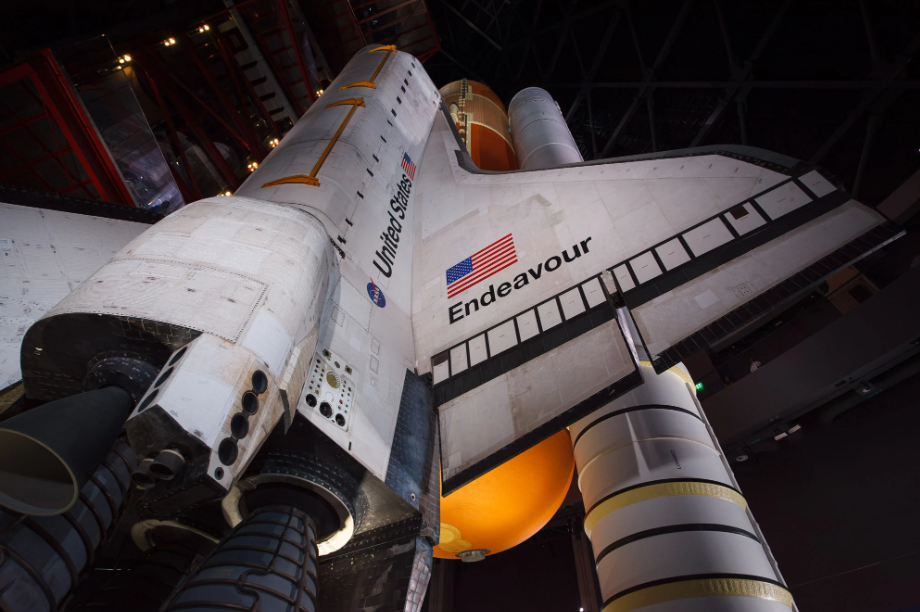
What makes the opening especially significant is the way Endeavour will be displayed. Rather than sitting horizontally as it has for years, the shuttle will now stand in a dramatic 20-story vertical “ready-to-launch” position. The gallery will be the only place in the world to show a complete shuttle stack that includes the orbiter, the solid rocket boosters, and a rare surviving external tank. That means visitors will not simply be seeing a retired spacecraft; they will be seeing a full launch configuration designed to recreate the scale and power of shuttle-era spaceflight.
The Science Center is clearly presenting the new building as more than a museum annex. The Air and Space Center will also house the Korean Air Aviation Gallery and the Kent Kresa Space Gallery, but the Samuel Oschin Shuttle Gallery is expected to be the main attraction. Jeffrey Rudolph, the Science Center’s president and chief executive, said that officials believe people will come “from all over the world” to see Endeavour in this setting. That reflects the institution’s broader ambition: to make the exhibit an international destination, not just a local science museum feature.
The emotional weight of the project comes partly from Endeavour’s history. One of only three surviving space shuttles, Endeavour flew 25 successful missions between 1992 and 2011. It arrived in Los Angeles in 2012, carried atop a modified Boeing 747 to LAX before making a memorable street-level procession through the city to Exposition Park. For many Angelenos, that journey turned the shuttle into a civic symbol, and the new gallery is the final stage of a long effort to give it a proper permanent home.
The building itself is also part of the story. Designed by ZGF Architects, the sleek new tower finished construction in April 2026. Project director Dennis R. Jenkins, a former NASA contractor who worked on space shuttles for 30 years, said that seeing Endeavour in its vertical position still takes his breath away. His comments suggest that even people deeply familiar with the shuttle program find the completed display unusually powerful.
The exhibit experience is being designed to feel immersive and theatrical. Visitors will encounter features including a J.J. Abrams-produced launch film, a fog-filled reveal, glass-floor views, and even a reentry slide, all meant to spark curiosity and make the story of spaceflight feel vivid rather than static. That mix of engineering history and spectacle shows the Science Center is aiming to inspire younger visitors as much as it is preserving aerospace heritage.
The opening of the Samuel Oschin Air and Space Center marks the completion of a major Los Angeles cultural project decades in the making. Endeavour’s final “mission” is no longer about traveling into orbit, but about becoming a permanent public monument to exploration, science, and imagination. By presenting the shuttle in a full launch stack for the first time anywhere in the world, the Science Center is turning a retired spacecraft into a new landmark for the city and a global destination for space enthusiasts.