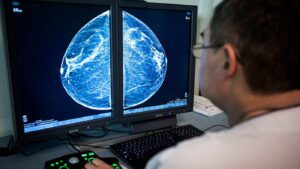

Artificial intelligence is emerging as a powerful tool for patients struggling with rare and difficult-to-diagnose diseases, potentially shortening a medical journey that can otherwise take years. Patients, doctors and nurses are increasingly using AI systems to identify patterns, interpret complex medical information and suggest conditions that healthcare professionals may rarely encounter.
One example involves Rachel Hinken and her son Oliver. For years, Hinken questioned why her son experienced developmental delays and remained exceptionally short for his age. Doctors repeatedly reassured the family, but Hinken remained concerned. She eventually used Face2Gene, an AI-assisted application that analyzes facial characteristics associated with rare genetic disorders.
The system suggested trichorhinophalangeal syndrome, or TRPS, a rare genetic condition affecting bones, joints and other physical characteristics. Genetic testing and clinical consultations subsequently confirmed that Oliver had the disorder—and revealed that Hinken had it as well.
Cases like this demonstrate one of AI’s potential advantages in medicine: its ability to rapidly compare large amounts of information and detect patterns that individual clinicians may rarely see during their careers. Rare diseases are particularly challenging because doctors may have limited experience with them, while symptoms can overlap with much more common illnesses.
It illustrated both AI’s promise and its limitations.
In a study involving 90 previously solved complex rare-disease cases, two AI chatbots correctly suggested the diagnosis in 13% and 10% of cases, respectively. Physicians reviewing patients’ medical records reached the correct diagnosis in 5.6% of cases. Although those percentages remain relatively low, the results suggest AI can provide useful additional possibilities in especially difficult cases.
AI is also being incorporated directly into clinical practice. At Mayo Clinic, nurse practitioner Michael Ames treated a 77-year-old patient experiencing shortness of breath and chest pressure. The patient’s medical team considered heart failure, while the patient himself suspected pneumonia. An AI analysis of his electrocardiogram instead indicated a 98% probability of cardiac amyloidosis, a rare and serious heart condition. Additional testing confirmed the diagnosis.
Patients themselves are also using general-purpose AI chatbots to better understand complicated medical information. Some use the technology to analyze test results, organize medical records, research experimental treatments and prepare questions to discuss with physicians. For people who have spent years moving between specialists without clear answers, these capabilities can make it easier to participate actively in their healthcare.
However, medical experts emphasize that AI should not be treated as a replacement for physicians. The systems can produce errors, misinterpret incomplete information and suggest incorrect diagnoses. Clinical geneticist Xiao P. Peng said that AI is particularly useful for generating possibilities, translating medical terminology and searching research quickly, but human involvement remains essential when synthesizing evidence and determining a diagnosis.
Another challenge is data. Rare diseases, by definition, affect relatively few people, meaning researchers have fewer medical records, tissue samples and images available for training AI systems. Much existing information also remains undigitized, limiting what algorithms can learn. Researchers are developing initiatives to collect and digitize more rare-disease data in hopes of improving future diagnostic models.
Pharmaceutical companies, nonprofits and technology developers are increasingly exploring these opportunities. AI could eventually help identify undiagnosed patients, connect them with specialists and accelerate research into treatments.
The emerging technology therefore represents a potentially important shift in medicine. AI may not replace clinical expertise, but it can function as another investigative tool—one capable of searching enormous amounts of medical information and uncovering connections that might otherwise remain hidden. For patients who have spent years searching for explanations, that assistance could mean reaching the right diagnosis considerably sooner.