
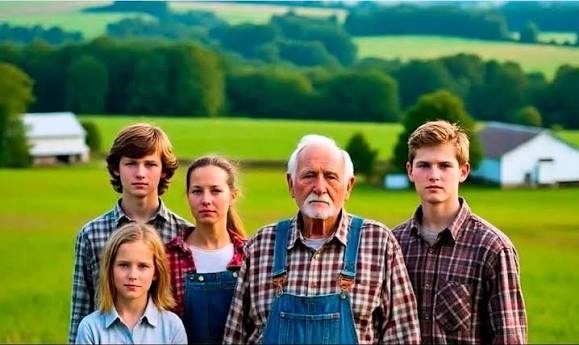

A Kentucky mother and daughter turned down an extraordinary $26.48 million offer for their farmland after learning that the property would be transformed into a massive artificial-intelligence data center, highlighting the growing conflict between America’s AI infrastructure boom and rural communities determined to preserve their land and way of life.
Delsia Bare and her mother, Ida Huddleston, own farmland near Maysville, Kentucky, that has been cultivated by their family for nearly two centuries. An unidentified company approached them seeking hundreds of acres. Bare was offered $48,000 per acre for 463 acres, while Huddleston was offered $60,000 per acre for 71 acres. Together, the proposed transaction would have delivered more than $26 million to the family.
Initially, the women were willing to consider the offer. Their position changed dramatically after discovering what the buyer planned to build: a 2.2-gigawatt hyperscale data center, an enormous facility designed to provide the computing capacity required by artificial-intelligence systems. They ultimately rejected the deal.
Their decision has become emblematic of a much larger transformation taking place across rural America. As technology companies race to expand AI, they require enormous amounts of computing power. That demand is pushing developers beyond established technology hubs and into rural regions where large parcels of relatively inexpensive land are available and where projects can potentially gain access to electricity, water and transportation infrastructure.
For many communities, these developments promise significant economic benefits. Data centers can bring billions of dollars in investment, construction activity, new tax revenue and employment. Rural regions that have struggled to attract major industries may see them as a rare opportunity for economic expansion. Across the country, AI-related projects are already driving greater demand for rural land and energy infrastructure.
But the projects are also producing growing resistance. Residents worry about losing farmland, changing the character of small communities and placing additional pressure on local resources. Hyperscale data centers can require extraordinary amounts of electricity to operate thousands of high-performance servers, while some facilities also use substantial quantities of water for cooling.
The controversy in Kentucky illustrates another difficult issue: how communities balance private property rights with broader economic development. A landowner may receive an offer worth many times the agricultural value of a property, creating powerful financial incentives to sell. But neighbors can still experience the consequences through new transmission lines, industrial development, traffic, infrastructure expansion and changes to the surrounding landscape.
The proposed Kentucky project has therefore created divisions extending beyond one family’s decision. Supporters of large-scale technology investment can point to the economic opportunities created by AI infrastructure, while opponents question whether the financial rewards justify permanently transforming agricultural communities.
Bare and Huddleston’s rejection is particularly striking because of the amount of money involved. Their choice demonstrates that the AI infrastructure race is not simply a contest between technology companies. Increasingly, it is also becoming a negotiation with farmers, landowners, local governments and residents over what rural America should look like in the decades ahead.
The dispute represents a broader challenge facing the United States as artificial intelligence expands. Building the digital infrastructure necessary for AI requires physical resources on an enormous scale: land, electricity, water, transmission networks and industrial facilities. Those requirements mean that a technological revolution often described as existing in “the cloud” is producing very tangible consequences on the ground.
For this Kentucky family, preserving nearly 200 years of agricultural heritage was ultimately worth more than a life-changing financial offer. Their decision underscores a question likely to emerge repeatedly as America’s AI boom accelerates: how much transformation are rural communities willing to accept in exchange for the economic opportunities promised by the new digital economy?