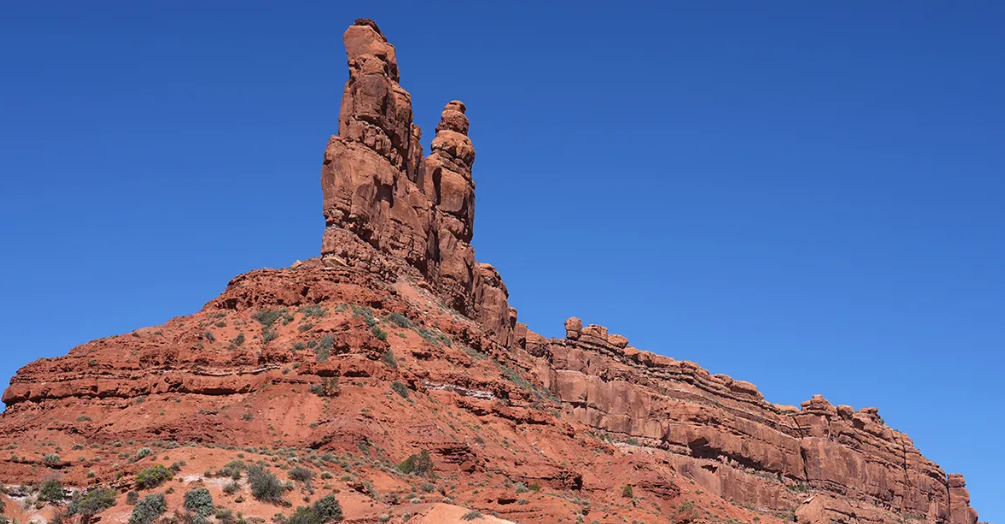

President Donald Trump has sharply reduced the boundaries of Bears Ears and Grand Staircase-Escalante, two national monuments in southern Utah known for their extraordinary landscapes, archaeological resources and cultural importance to Native American tribes. The new orders reduce the monuments’ combined protected area by roughly 90%, from more than 3.2 million acres to less than 303,000 acres.
Bears Ears will shrink from approximately 1.36 million acres to about 121,100 acres, while Grand Staircase-Escalante will fall from roughly 1.87 million acres to around 181,500 acres. The new boundaries are even smaller than those established when Trump reduced both monuments during his first administration. Former President Joe Biden later restored their broader protections in 2021.
Trump described the action as a way to return federal land to public use and correct what he considers presidential overreach. His administration argues that earlier monument designations covered far more territory than was necessary to protect specific historic or scientific features. Areas removed from monument status may become more accessible for grazing, mining, logging, motorized recreation and other commercial activities.
Utah’s Republican leaders welcomed the decision. They have long argued that Washington imposed overly restrictive protections without sufficiently considering the needs of rural communities, local governments and industries dependent on public land. Supporters also maintain that land removed from the monuments will not become completely unprotected because some sections remain covered by wilderness study areas and other federal conservation classifications.
Opposition has been especially strong among Native American nations connected to Bears Ears. The region contains ancient dwellings, ceremonial locations, burial grounds, rock art and countless artifacts representing thousands of years of Indigenous history. Tribal leaders say the reduction threatens sacred places and weakens a landmark co-management arrangement that had given tribes a formal role in protecting the monument.
Environmental organizations also warn that the rollback could expose sensitive land to uranium extraction, coal development, roads and other industrial activity. Grand Staircase-Escalante includes significant coal resources, while areas surrounding Bears Ears contain uranium and other minerals. Critics argue that once roads, mines or drilling operations enter these landscapes, archaeological and ecological damage may be difficult or impossible to reverse.
The decision is likely to produce another major legal battle over the Antiquities Act of 1906. The law clearly gives presidents authority to create national monuments, but it does not explicitly state whether later presidents may substantially reduce them. Previous presidents have altered monument boundaries, providing historical precedent for Trump’s position. However, conservation groups argue that reductions of this scale exceed presidential authority and that only Congress can revoke protections granted under the law.
Earthjustice and other organizations have already indicated that they plan to challenge the new boundaries. Lawsuits arising from Trump’s earlier reductions were never fully resolved because Biden restored the monuments after taking office. The latest action could therefore force courts to address a constitutional and statutory question that has remained unsettled for years.
The dispute also reflects a broader national conflict over the purpose of public lands. Trump and his allies emphasize resource production, recreation and greater state influence. Tribal nations, conservationists and Democrats stress preservation, Indigenous sovereignty and protection of irreplaceable historical resources.
The monument reduction is far more than a boundary change. They represent another reversal in decades of shifting federal policy and reopen fundamental questions about presidential power, environmental protection and who should control lands carrying enormous economic, cultural and spiritual value.