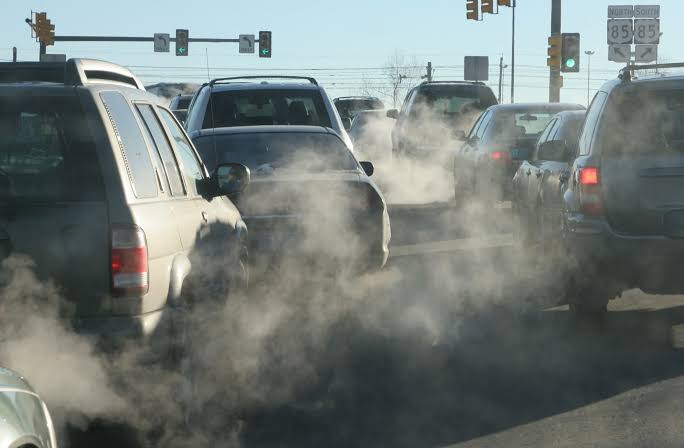

A federal judge has temporarily blocked the Trump administration from sending several longstanding California vehicle-emissions waivers to Congress for potential repeal, delivering an important victory to California in its escalating battle with Washington over who has the authority to regulate pollution from cars, trucks and other engines.
U.S. District Judge Beryl Howell in Washington issued a preliminary injunction preventing the Environmental Protection Agency from transmitting four California waivers to the Republican-controlled Congress under the Congressional Review Act, or CRA.
The dispute centers on California’s unique authority under the Clean Air Act. Because the state began regulating vehicle pollution before federal standards existed, Congress gave California the ability to establish emissions requirements stricter than national rules when it receives a waiver from the EPA. Other states can subsequently adopt California’s standards, giving the state’s policies influence far beyond its borders.
The Trump administration has repeatedly attempted to reduce that authority as part of its broader effort to reverse regulations encouraging cleaner and electric vehicles.
In June, the EPA announced that it was transmitting four previously approved California waivers to Congress. They cover regulations involving vehicle greenhouse-gas and evaporative emissions as well as pollution standards affecting lawn-and-garden equipment.
The administration argues that the waivers qualify as “rules” under the Congressional Review Act and therefore should have been formally submitted to lawmakers when they were originally approved. One of the affected waivers dates back to 2009.
That interpretation carries enormous consequences.
The CRA gives Congress a streamlined mechanism for overturning federal regulations. A resolution of disapproval can pass the Senate with a simple majority rather than the 60 votes typically required to overcome a filibuster. Once a regulation is overturned under the law, federal agencies can also face restrictions on issuing another rule that is “substantially the same.”
California sued to stop the EPA’s action, arguing that its emissions waivers are not federal regulations subject to congressional repeal under the CRA. Instead, the state maintains that they are administrative decisions allowing California to enforce its own laws.
Judge Howell sided with California at this stage of the litigation.
In her preliminary ruling, Howell criticized the EPA’s attempt to reinterpret the waivers, saying the government was asking the court to accept serious inconsistencies in its legal position. Her injunction prevents the agency from sending the four waivers to Congress while the lawsuit proceeds.
The latest fight follows an earlier and highly consequential confrontation over California’s environmental authority.
In 2025, the EPA sent three Biden-era California emissions waivers to Congress under the Congressional Review Act. Congress subsequently voted to overturn them, and President Trump signed the resolutions into law. Those actions targeted California rules involving electric vehicles, heavy-duty trucks and nitrogen-oxide emissions. The EPA maintains that the congressional actions prevent California from enforcing those requirements and restrict future administrations from approving substantially similar standards.
The four additional waivers involved in the new lawsuit would significantly expand that strategy.
If the administration ultimately succeeds, California could lose important parts of the regulatory authority it has exercised for decades. Because numerous other states follow California’s standards, the consequences could also influence automakers and consumers across the country.
The Trump administration argues that California’s policies effectively shape the national automobile market, increasing costs and pushing manufacturers toward electric vehicles even when federal regulations are less restrictive. EPA Administrator Lee Zeldin has framed the administration’s approach as protecting consumer choice and preventing California from imposing its environmental agenda nationwide.
California officials see the issue very differently. They argue that the Clean Air Act explicitly protects the state’s ability to address its severe air-pollution problems and that the administration is attempting to use a congressional procedure designed for federal regulations to eliminate state authority granted under another federal law.
The case therefore extends far beyond individual emissions standards. At stake is a fundamental question about the balance of power among California, federal environmental regulators and Congress.
For now, the judge’s injunction prevents the administration from opening another route for Congress to overturn California’s environmental policies. But the underlying legal battle remains unresolved.
The eventual outcome could determine whether California continues serving as America’s most influential laboratory for vehicle-emissions policy—or whether the federal government can permanently restrict a regulatory authority the state has exercised for generations.